
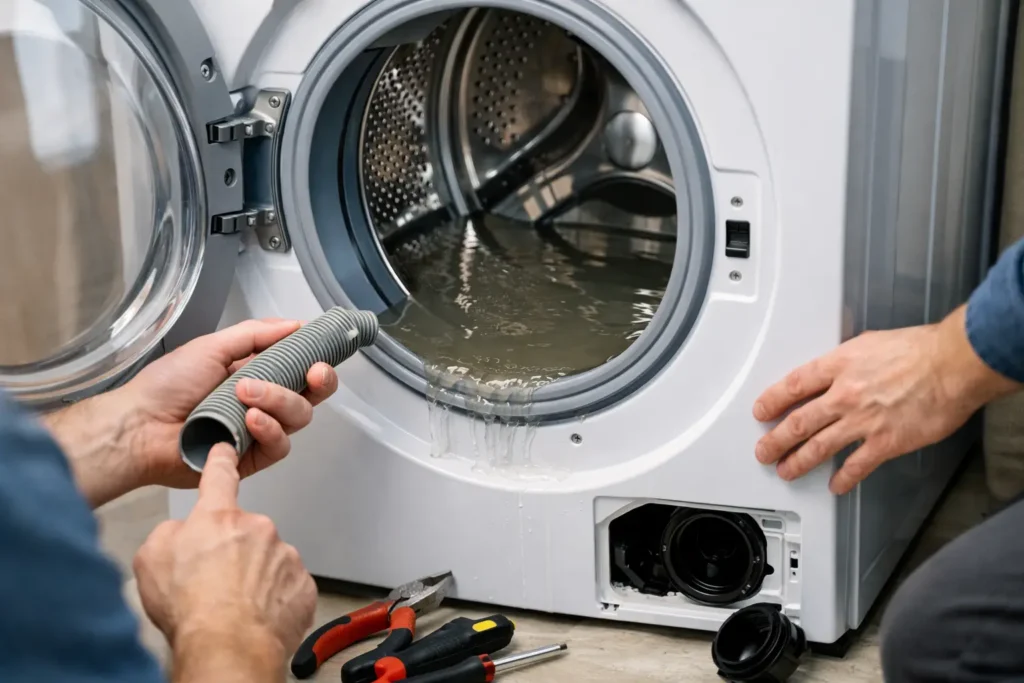
A washer full of dirty water usually shows up at the worst possible time – right before work, right before guests, or right when laundry is already behind. When the cycle stops and the drum is still full, most homeowners want the same thing: a clear answer, a fast fix, and no guesswork on cost.
That is exactly how washer problems should be handled. Some drainage issues are simple enough to identify safely. Others point to a failing pump, a control problem, or a blockage deeper in the system that needs a professional repair done right the first time.
Washer not draining water repair starts with the symptom
Not every draining problem looks the same. In some homes, the washer finishes the cycle but leaves an inch or two of water behind. In others, it stops mid-cycle and locks the door with a full tub. You may also hear a humming sound when it tries to drain, or no sound at all.
Those details matter because they point to different failures. A humming machine often suggests the drain pump is trying to work but cannot move water because of a clog or a jammed impeller. A silent machine can point to a power, lid switch, control board, or wiring issue. If the washer drains slowly instead of not draining at all, the problem may be building over time rather than happening in one sudden failure.
For homeowners and property managers, the practical takeaway is simple: the more specific the symptom, the faster the diagnosis tends to be.
What causes a washer to stop draining?
The most common cause is a blockage. Small clothing items, lint, coins, pet hair, and detergent buildup can all restrict water flow. On front-load washers, the drain pump filter is a frequent trouble spot. On top-load models, the issue may be a kinked drain hose, a clogged pump, or a problem in the standpipe connection.
A failed drain pump is also common, especially in washers that have seen heavy use. If the motor inside the pump has worn out, the washer may not move water at all. In some cases, the pump still gets power and makes noise, but the internal impeller is damaged and cannot do the job.
There are also control-related failures. A bad lid switch on a top-load washer may prevent the machine from entering the drain or spin cycle. A door lock issue on a front-load unit can do something similar. Less often, the pressure switch, wiring harness, or main control board is the root of the problem.
And then there is the drain system outside the washer itself. If the household drain line is partially blocked, the machine may pump out water slowly, back up, or stop with an error code. That can look like a washer failure when the actual issue is in the plumbing path.
Safe first checks before scheduling washer not draining water repair
If there is standing water in the tub, start by turning the washer off and unplugging it. That matters for safety, especially if you plan to inspect a filter or hose. Water and electrical components are a bad combination, and rushing often makes a small problem messier.
Next, check the drain hose behind the machine. If it is sharply kinked, crushed against the wall, or inserted too deeply into the standpipe, the washer may not drain correctly. Straightening the hose can sometimes restore flow, but if the hose is clogged internally, it will still need to be cleared or replaced.
If you have a front-load washer with an accessible pump filter, inspect it carefully. Be ready for water to come out when the filter is opened. Towels and a shallow pan help. Finding lint, hairpins, coins, or a baby sock in that filter is not unusual.
You should also pay attention to what happened before the failure. An oversized load, a bulky blanket, or too much detergent can create conditions that affect draining and spinning. That does not always mean the machine is broken, but it can trigger symptoms that look like a mechanical fault.
If the washer still will not drain after these basic checks, it is time for diagnosis. At that point, guessing tends to waste time and can turn one repair into several.
When not to attempt a DIY fix
There is a difference between checking for an obvious hose kink and taking apart a washer with water still inside it. Once the issue involves electrical testing, pump replacement, control access, or disassembly of panels and clamps, the repair is no longer a simple homeowner task.
This is especially true in multi-unit properties and commercial settings, where downtime affects more than one household or tenant. A delayed repair can create scheduling headaches, water damage risk, and repeat service calls if the first attempt misses the real cause.
It also depends on the machine. Some washers make filter access relatively easy. Others require more invasive disassembly just to reach the drain pump. High-end or newer electronic models can add another layer of complexity because a drain failure may be tied to a sensor or board issue, not just a blocked line.
A certified technician can separate a true pump failure from a control issue, a drain obstruction, or a plumbing problem. That matters because replacing the wrong part is one of the most expensive forms of DIY.
How a professional repair visit should work
A proper service call should begin with diagnosis, not assumptions. The technician should confirm whether the washer is receiving the correct signals to drain, whether the pump is energizing, whether water flow is restricted, and whether the machine can safely complete a spin cycle after the repair.
That process usually includes inspecting the pump and filter area, testing the drain system, checking the lid switch or door lock if needed, and reviewing any fault codes stored by the machine. If the problem is in the external drain path, that should be explained clearly so you are not paying for an appliance part that will not solve the issue.
Just as important, pricing should be straightforward. The right approach is upfront pricing after diagnosis, so you know what failed, what it takes to fix it, and what the repair will cost before work begins. That kind of clarity helps homeowners make quick decisions and helps property managers avoid back-and-forth delays.
Common repairs for a washer that will not drain
Many service calls come down to one of a few repairs. A clogged pump filter may only need to be cleaned and reassembled properly. A damaged or obstructed drain hose may need replacement. If the pump motor has failed, the drain pump assembly is often replaced.
Other repairs involve the switch or lock system that tells the washer it is safe to drain and spin. On certain machines, a control board or pressure sensing issue can interrupt the cycle even when the pump itself is fine. That is why the same symptom – water left in the tub – can lead to very different repairs.
The trade-off is straightforward. Some fixes are quick and relatively minor. Others require parts, testing, and more labor. The value of a professional diagnosis is that you get a clear answer before more time is lost.
Why fast service matters more than most people expect
A washer that does not drain is not just inconvenient. Wet laundry can mildew fast, especially if it sits overnight. Standing water inside the machine can also create odors and leave residue behind. In busy households, that one failure can disrupt the entire week.
For landlords, building managers, and small businesses, the cost of waiting is often higher. Delays can mean tenant complaints, unusable laundry areas, or staff spending time managing a problem that should have been resolved on the first visit.
That is why scheduling speed matters, but only if it is paired with accurate work. Fast service without proper diagnosis is just a faster way to repeat the same issue. The better standard is prompt response, clear communication, and repair work done right the first time.
Choosing the right service for washer not draining water repair
When you are comparing repair options, look for the basics that reduce risk: certified technicians, full insurance, clear communication, and a satisfaction guarantee. Those are not marketing extras. They are signs that the company is built to work inside occupied homes, rental properties, and active businesses without creating more uncertainty.
Local coverage also matters. A company that regularly serves Northern New Jersey understands the need for quick scheduling and dependable follow-through. If you need help with washer not draining water repair, United Technical Services provides residential and commercial appliance repair with upfront pricing after diagnosis and service focused on minimizing downtime.
If your washer is sitting full of water right now, the next step does not need to be complicated. Start with safe basic checks, avoid taking the machine apart unless you are certain of the problem, and get a professional diagnosis before a small issue turns into a longer outage.