
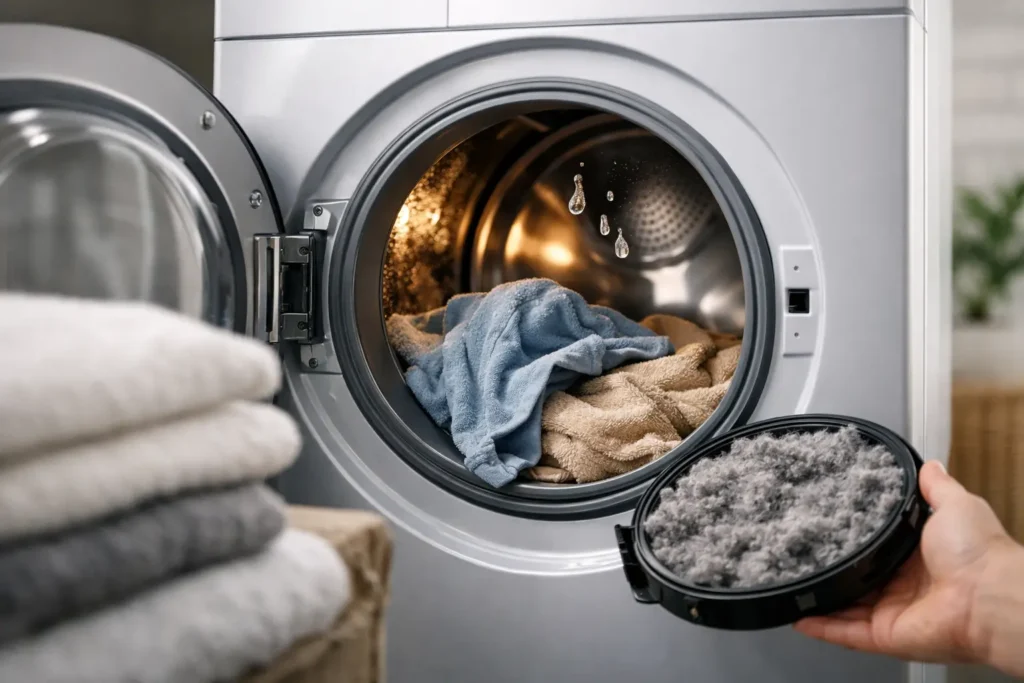
Laundry usually falls apart in small ways first. A cycle that used to take 45 minutes starts taking 70. Towels come out warm but still damp. Then someone reruns the same load, your utility bill creeps up, and the dryer keeps getting blamed for “just being old.”
If your dryer takes too long to dry, the problem is often fixable. In some cases, it is a simple airflow issue. In others, the machine is heating poorly, sensing moisture incorrectly, or struggling with a vent restriction that can become a safety hazard. The key is knowing what you can check yourself and when a professional diagnosis makes more sense.
When a dryer takes too long to dry, start with airflow
Most long dry times come back to one thing – restricted airflow. A dryer does not just make heat. It has to move hot, moist air out of the drum and vent it outside. If that air cannot leave efficiently, the moisture stays trapped around the clothes, and drying times stretch out.
That is why a dryer can still feel hot and still fail to dry properly. Heat alone is not enough. The machine needs steady intake air, strong drum tumbling, and a clear path through the vent system.
A clogged lint screen is the easiest place to start. Even if you clean it regularly, fabric softener residue can build a nearly invisible film over the mesh and reduce airflow. Washing the screen with warm water and mild soap can help restore proper air movement.
The vent line behind the dryer is another common trouble spot. If it is crushed, kinked, disconnected, or packed with lint, the dryer works harder and dries slower. Long vent runs, multiple turns, and older flexible ducting can make the problem worse.
Common reasons a dryer takes too long to dry
Airflow problems are the most common cause, but not the only one. A dryer that runs too long can have several possible faults, and the right fix depends on what else the machine is doing.
Blocked or dirty exhaust vent
This is the first issue we rule out on many service calls. When lint builds up in the venting, moist air cannot escape the way it should. Clothes stay damp, cycle times increase, and the dryer may overheat and shut itself down intermittently.
If you notice the laundry room feels hotter than usual, the outside vent flap barely opens, or the top of the dryer gets unusually hot, vent restriction moves higher on the list.
Overloading the drum
A packed dryer may seem efficient, but it often creates the opposite result. Clothes need room to tumble so warm air can move around them. Heavy loads, especially towels, jeans, bedding, or mixed fabrics, can trap moisture deep inside the load.
This is one of the easier situations to correct. Smaller, better-sorted loads often dry faster than one oversized load run twice.
Moisture sensor problems
Many newer dryers rely on moisture sensors to decide when clothes are dry. If those sensors are coated with residue from dryer sheets or detergent carryover, the machine may misread the load and extend the cycle or stop at the wrong time.
In other cases, the sensor itself or the control board may be failing. That is not something you can confirm by guesswork alone. Accurate diagnosis matters here, especially on premium models with more advanced controls.
Weak heating element or gas ignition issue
Electric dryers may have a heating element that is partially failing. Gas dryers may have trouble with the igniter, flame sensor, coils, or gas valve operation. In both cases, the dryer may still produce some heat, just not enough consistent heat to dry effectively.
This is where homeowners can lose time by assuming, “It still gets warm, so the heater must be fine.” Partial heating faults are real, and they often lead to long dry times before total failure happens.
Cycling thermostat or thermal fuse issues
Dryers regulate heat through thermostats, sensors, and safety devices. If one of those parts is malfunctioning, the dryer may cut heat too early, heat inconsistently, or run without reaching proper drying temperature.
These parts are important for both performance and safety. Replacing the wrong one based on internet guesswork can waste money and leave the real issue unresolved.
Drum or blower problems
If the drum is not tumbling correctly, clothes will not expose damp surfaces evenly to heated air. If the blower wheel is loose, damaged, or obstructed, airflow drops even if the vent itself is clear.
These are less obvious failures, but they can produce the same complaint: the dryer runs and runs, but the clothes are still not dry.
What you can check safely before calling for service
There are a few practical checks that make sense before you schedule a repair. First, clean the lint filter thoroughly, including washing off any residue. Next, look behind the dryer to see whether the vent hose is crushed or disconnected.
If your exterior vent is accessible, check whether the flap opens while the dryer is running. Weak airflow outside usually points to a blockage or blower issue. You can also try drying a small load of similar fabrics instead of a large mixed load. That helps rule out simple loading problems.
For sensor models, wiping the moisture sensor bars inside the drum with a soft cloth and mild cleaner can help if residue is interfering with readings.
What you should not do is open the dryer cabinet, bypass safety components, or keep running a machine that smells hot or seems to be overheating. If lint buildup is deeper in the venting or internal components are failing, the safest move is a professional inspection.
Signs the problem is no longer a DIY issue
Some symptoms point to a repair need rather than a maintenance issue. If dry times have suddenly changed rather than gradually worsened, a part failure becomes more likely. The same is true if the dryer is heating inconsistently, shutting off mid-cycle, making unusual noises, or leaving clothes far hotter than normal.
For gas dryers, delayed ignition or no heat at all should be addressed promptly. For electric dryers, repeated long cycles can indicate an element, thermostat, or control problem that needs testing with the right tools.
Property managers and business operators should be especially careful here. A slow dryer in a multi-unit building or commercial setting can quickly become a bigger service problem, either through tenant complaints, heavier machine wear, or vent-related safety concerns. Fast scheduling and accurate diagnosis matter more than trial-and-error part swapping.
Why professional diagnosis saves time
The challenge with a dryer that takes too long to dry is that several different faults can create the same symptom. A blocked vent, bad heater, weak blower, dirty sensor, and control issue can all look similar from the outside.
That is why professional service should start with diagnosis, not assumptions. A certified technician can test airflow, heating performance, cycling behavior, and electrical or gas components to identify the real cause. That approach is faster, safer, and usually less expensive than replacing parts one by one.
For homeowners, that means less downtime and clearer answers. For property managers and businesses, it means fewer repeat visits and less disruption. At United Technical Services, that is the standard – clear communication, upfront pricing after diagnosis, and repairs done right the first time.
How to help your dryer last longer after the repair
Once the immediate issue is fixed, a few habits can keep dry times more consistent. Clean the lint screen every cycle. Avoid overloading the drum. Separate heavy items from lighter fabrics when possible. Make sure the vent line stays properly positioned and is not crushed when the dryer is pushed back into place.
It is also smart to have the venting inspected if your dryer is older, heavily used, or part of a shared laundry setup. A machine can perform perfectly and still struggle if the exhaust path is too restricted.
No dryer is supposed to need two or three cycles for normal loads. If yours does, it is not just inconvenient. It is a sign the machine is losing efficiency, and in some cases, operating under stress. The sooner you address it, the better the chances of restoring normal performance without a larger repair.