
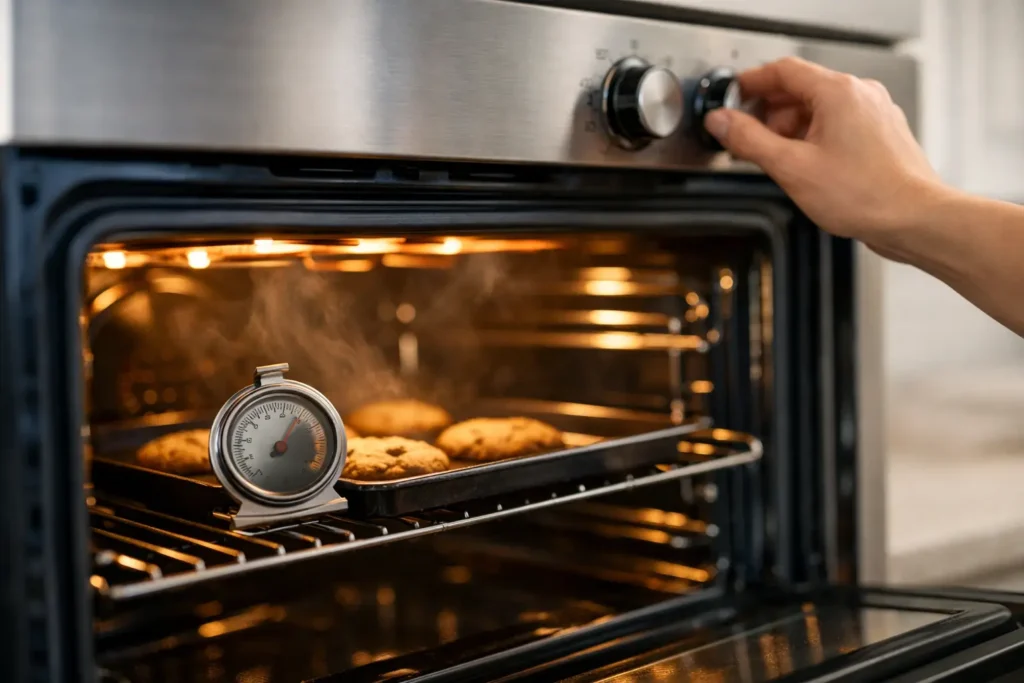
Dinner looks done on the outside, still raw in the center, and now you are turning the knob up another 25 degrees hoping for the best. When an oven starts running cold, the problem usually shows up before it fully stops working. That matters, because an oven that is not heating correctly can waste time, ruin food, and create bigger repair issues if the root cause is ignored.
If your oven is not heating to temperature, the fix depends on whether the issue is with temperature accuracy, heat production, or heat retention. Some causes are simple. Others involve electrical components, gas ignition, or control failures that should be handled by a trained technician. The right next step is not guessing. It is narrowing down the symptoms and getting a clear diagnosis.
What it means when your oven is not heating to temperature
There are two common versions of this problem. In one, the oven heats, but it never reaches the temperature you set. In the other, it reaches temperature slowly, cycles unevenly, or loses heat during cooking. Those are similar symptoms, but not always the same repair.
A slight temperature swing is normal. Most ovens cycle above and below the set point as part of regular operation. But if you set the oven to 350 and food consistently takes much longer than expected, browns unevenly, or comes out undercooked, there is likely a part failing or a calibration issue that needs attention.
For households, this becomes a daily disruption fast. For property managers and small commercial kitchens, it can turn into complaints, delays, and unnecessary downtime. That is why accurate diagnosis matters. Replacing the wrong part wastes time and money.
Common reasons an oven not heating to temperature happens
A faulty bake element or hidden lower element
On electric ovens, the bake element is one of the first parts to check. If it is weak, cracked, blistered, or not glowing as it should, the oven may still produce some heat but not enough to maintain the correct temperature.
Some models hide the lower element beneath the oven floor, so the failure is not always visible. In that case, the oven may appear to work while actually underheating for every bake cycle. Broiling may still function normally, which can make the problem feel inconsistent.
A failing igniter in a gas oven
With gas ovens, a weak igniter is one of the most common causes of low heat or slow preheating. The igniter may glow and still be bad. That is the part many people miss.
If the igniter is too weak to draw the correct current, the gas valve may not open fully or on time. The result is delayed ignition, reduced heat, or an oven that never reaches the selected temperature. This is a repair that should be handled carefully and correctly the first time.
A bad temperature sensor
The oven sensor reads cavity temperature and communicates with the control board. If that reading is off, the oven can heat too little, too much, or cycle at the wrong times.
A sensor issue often shows up as inconsistent cooking results rather than a total loss of heat. One day cookies burn on top and stay pale underneath. The next day a casserole takes much longer than expected. That pattern often points to faulty temperature feedback.
Oven not heating to temperature after preheating
If the oven reaches the preheat signal but cannot hold temperature, the issue may be with the sensor, relay board, control board, or heating circuit. The preheat tone does not always mean the full cavity has stabilized. It only means the control has detected a target point based on the information it is getting.
That is why some customers say, “It says preheated, but the food still takes forever.” In many cases, the oven is cycling poorly after preheat, not failing during startup. That distinction helps narrow the diagnosis.
Door seal problems can also play a role. A torn gasket or door that does not close properly lets heat escape, especially during longer bake times. This is not always the main cause, but it can make a marginal heating problem worse.
What you can check before scheduling service
There are a few safe checks worth making before calling for repair. Start with the basics. Confirm the oven is set to bake and not delayed start, warm mode, or convection conversion if your model includes those features. It sounds obvious, but control settings cause more confusion than most people expect.
Next, look at the condition of the door gasket and make sure racks or foil are not interfering with door closure. If you have an electric oven, check whether the bake element is visibly damaged. If you have a gas oven, pay attention to whether the igniter glows and whether ignition seems delayed.
You can also test temperature accuracy with an oven-safe thermometer, but use that result carefully. Many inexpensive thermometers are not precise, and ovens naturally cycle. The better approach is to check whether the oven averages close to the set temperature over time, not whether it holds one exact number every minute.
If breakers have tripped or the oven recently lost power, that is worth noting too. An electric range can partially function on improper voltage, which creates confusing symptoms. Surface burners may work while the oven does not heat correctly.
When not to keep troubleshooting on your own
Once the issue points to internal components, it is time to stop experimenting. Live voltage, gas ignition systems, and electronic controls are not good trial-and-error projects. The risk is not only personal safety. Misdiagnosis can damage other parts or leave the oven operating unsafely.
That is especially true if you smell gas, hear repeated clicking, see error codes, or notice that the oven trips the breaker. Those symptoms need professional attention. A certified, fully insured technician can test the igniter, sensor resistance, control output, and heating circuit properly instead of replacing parts based on guesswork.
For landlords, property managers, and business operators, professional service is also the faster path. Downtime costs more when multiple tenants or customers are affected. A clear diagnosis with upfront pricing after inspection helps you make a decision quickly and avoid repeat visits.
Why accurate diagnosis saves money
An oven not heating to temperature can look like the same problem across different brands, but the actual cause may vary widely. On one unit, it is a failing bake element. On another, it is a sensor reading out of range. On a premium oven, the issue may involve a control board, relay, or calibration setting that requires brand-specific experience.
This is where repair discipline matters. Swapping parts until something works is not efficient. Good service starts with testing, not assumptions. That is how you get the repair done right the first time and avoid paying for parts you did not need.
At United Technical Services, that approach is central to how service is handled. Customers get clear communication, fast scheduling when available, and upfront pricing after diagnosis so there are no surprises once the technician is in your home or property.
Repair or replace?
Sometimes the oven is absolutely worth repairing. If the unit is otherwise in good condition and the problem is isolated to an igniter, sensor, element, or control component, repair is often the practical choice. That is particularly true with premium brands and built-in units, where replacement costs are much higher.
But it depends on the age of the appliance, the overall condition, parts availability, and whether multiple systems are failing at once. If the repair estimate is approaching the value of the oven and other issues are already showing up, replacement may make more sense. A trustworthy technician should tell you that plainly.
The best next step if your oven is running cold
If your oven has become unreliable, the main goal is simple: restore safe, consistent heat without losing more time to ruined meals or repeat problems. Start with the basic checks you can do safely. If the issue continues, schedule service before the problem gets worse.
A properly repaired oven should preheat normally, hold temperature consistently, and cook food the way it is supposed to. You should not have to compensate by adding time, raising the setting, or rotating dishes endlessly just to get dinner on the table.
When an essential appliance stops performing, speed matters, but so does accuracy. The right repair is the one backed by real diagnosis, clear communication, and workmanship you can trust long after the first test bake.