
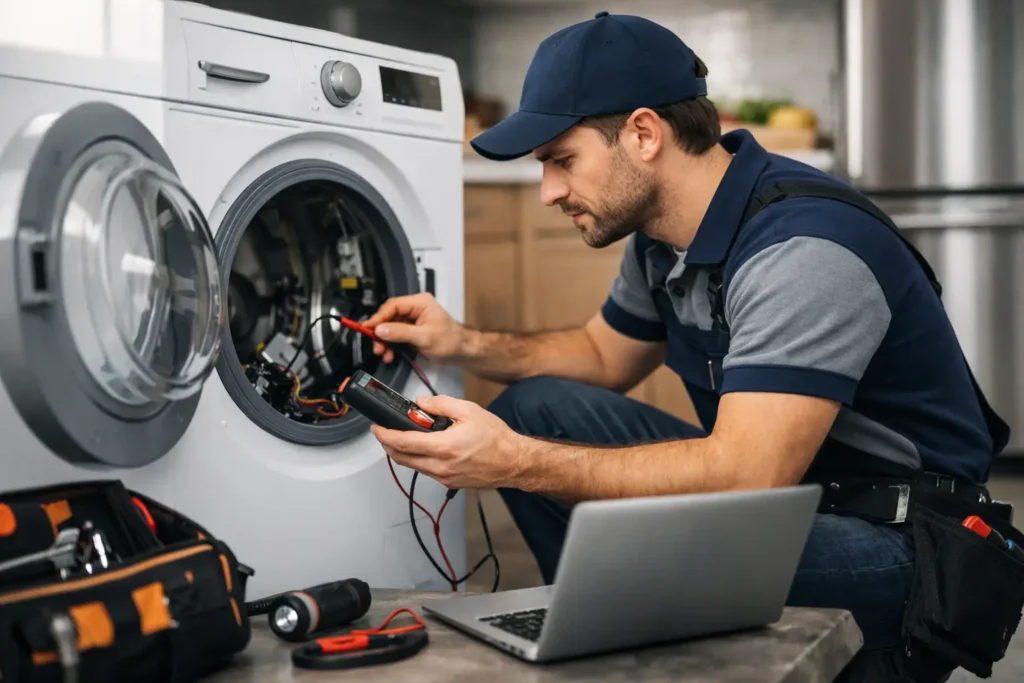
When a refrigerator stops cooling or a washer won’t drain, most people do not want a theory lesson. They want a clear answer, a realistic timeline, and confidence that the repair will be done right the first time. That is exactly where an appliance repair diagnostic process guide helps. It shows what a professional is actually checking, why an accurate diagnosis matters, and how upfront pricing should work before any repair begins.
Why the diagnostic process matters
A lot of appliance problems look the same from the outside. A dryer that will not heat could have a failed heating element, a bad thermostat, an airflow restriction, a power issue, or a control problem. A dishwasher that leaks might have a damaged door gasket, a cracked inlet component, a drain issue, or a loading problem that sends water in the wrong direction.
This is why diagnosis comes first. Replacing parts based on guesswork wastes time and money. It can also turn a smaller problem into a larger one if the real cause is missed. For homeowners, that means more disruption. For property managers and commercial operators, it means longer downtime and repeat service calls.
A disciplined process protects against that. It creates a clear path from symptom to root cause, then from root cause to repair options and upfront pricing.
What a professional appliance repair diagnostic process guide should include
A proper appliance repair diagnostic process guide starts before the technician opens a panel. The first step is gathering information. What is the unit doing, and just as important, what is it not doing? Has the issue been constant or intermittent? Did it begin after a storm, a move, a cleaning cycle, or a recent repair?
Those details matter because appliance failures often leave patterns. A refrigerator that warms up only in the afternoon may point toward airflow or condenser issues. A range that trips power during preheat suggests a different path than one that never powers on at all.
After the symptom review, the process moves into visible checks. This includes confirming power supply, shutoff positions, basic settings, door closure, ventilation, drainage, and signs of wear or damage. On many calls, these first observations narrow the issue quickly. They also help rule out conditions that mimic component failure.
Then comes the technical diagnosis. Depending on the appliance, that may involve testing continuity, voltage, resistance, ignition, motor operation, temperature response, water flow, pressure, sensors, control boards, or sealed system behavior. The point is not to test everything blindly. The point is to test the right items in the right order.
That order matters. A certified technician should work from the most likely and most safety-critical possibilities first, then confirm the failure before recommending parts or labor.
How the process changes by appliance type
No two categories fail in exactly the same way. The process is structured, but it is not one-size-fits-all.
Refrigerators and freezers
With cooling issues, diagnosis usually starts with temperature behavior, fan operation, condenser condition, door sealing, defrost function, and compressor activity. Some problems are straightforward, like a failed evaporator fan motor. Others require a more careful read, especially when symptoms point toward sealed system trouble, sensor issues, or control faults.
This is also where experience matters. A refrigerator may appear to have a compressor problem when the actual issue is airflow, ice buildup, or a defrost failure. Misreading that leads to expensive mistakes.
Washers and dryers
Laundry equipment often presents symptoms that overlap. A washer that will not spin may have a lid switch issue, a drain problem, a belt problem, a motor fault, or a control issue. A dryer that takes too long to dry may not need a major part at all. It could be restricted venting, which affects performance and creates a safety concern.
The right process looks at both mechanical operation and the conditions around the machine, not just the machine itself.
Ovens, ranges, and cooktops
Cooking appliances require extra attention to safe operation. Diagnosis may involve checking igniters, bake and broil elements, temperature sensors, spark systems, gas valves, relays, and incoming power. A unit that heats unevenly is a different call from a unit that will not ignite. Both may sound simple to the customer, but the failure path can be very different.
On premium appliances, accurate diagnosis is even more important because parts costs are often higher and access can be more involved.
Dishwashers and microwaves
Dishwashers need a balanced check of fill, wash, drain, and leak points. Microwaves require careful handling because stored electrical charge can create a hazard even when the unit is unplugged. That is one reason DIY diagnosis is not always the money-saving move it seems to be.
What customers should expect during diagnosis
A professional visit should feel organized, not rushed. The technician should listen to the complaint, inspect the unit, perform targeted testing, and explain the findings in plain language. If more than one issue is present, that should be stated clearly.
Customers should also expect a distinction between symptom and cause. “Not cooling” is a symptom. “The condenser fan motor has failed, causing heat not to dissipate properly” is a diagnosis. That difference is what supports a repair recommendation you can trust.
Once the issue is confirmed, the next step should be upfront pricing after diagnosis. That means you know what the repair involves before work proceeds. It reduces surprises and gives you a clear choice about whether to move forward.
Why upfront pricing after diagnosis is the right model
This approach is better for both sides. The customer gets transparency. The service company avoids promising a number before the problem is actually identified.
There is a real trade-off here. Some people want a repair quote over the phone before a technician arrives. For a few simple situations, a rough range may be possible. But most appliance failures cannot be priced responsibly without on-site diagnosis. Too many variables affect labor, parts, access, and whether the visible symptom reflects the actual failed component.
A company that gives firm pricing only after testing is usually protecting you from guesswork, not avoiding clarity. That is especially true with built-in units, premium brands, and appliances that may have secondary damage from continued use.
When diagnosis points to repair – and when it may not
Not every diagnosis leads to the same recommendation. Sometimes the issue is isolated, the repair is cost-effective, and the unit has plenty of service life left. That is the easy decision.
Other times, the picture is more mixed. An older appliance with multiple worn components may still be repairable, but that does not always mean it is the best investment. A trustworthy technician should explain the condition of the unit, the immediate repair needed, and any known risks that could affect value going forward.
That kind of honesty matters. It helps homeowners avoid putting money into the wrong machine, and it helps property managers and businesses decide quickly when downtime is expensive.
What separates a reliable service company from a guess-and-replace operation
The difference usually shows up in the process. Reliable companies do not lead with random parts. They lead with diagnosis, safety, and communication. They send certified, fully insured technicians. They explain what they found, present repair options clearly, and respect the home, building, or workplace while the job is underway.
They also understand urgency. A failed refrigerator, oven, or shared laundry machine is not a minor inconvenience. Fast scheduling matters, but speed should not come at the expense of accuracy. The best service experience combines both.
That is the standard at United Technical Services – clear communication, upfront pricing after diagnosis, and repairs done right the first time whenever possible.
How to prepare for a diagnostic visit
A few small steps can make the visit more efficient. If you can, note the model number, when the issue started, and any sounds, smells, leaks, or error codes you noticed. Do not keep running an appliance that appears unsafe. That includes sparking, burning odors, gas smell, repeated breaker trips, or major leaking.
It also helps to clear basic access to the unit. The goal is not to do the technician’s job. The goal is to make it easier to inspect the appliance quickly and safely.
The real value of a good diagnosis
The real value is not just identifying a bad part. It is reducing uncertainty. A good diagnosis tells you what failed, why the symptom happened, what the repair will involve, and what it will cost before the work starts. That saves time, limits repeat visits, and gives you confidence that the fix is built on facts, not assumptions.
When an essential appliance goes down, the best next step is not guessing. It is getting a clear answer from a professional process that respects your time, your property, and your budget.