
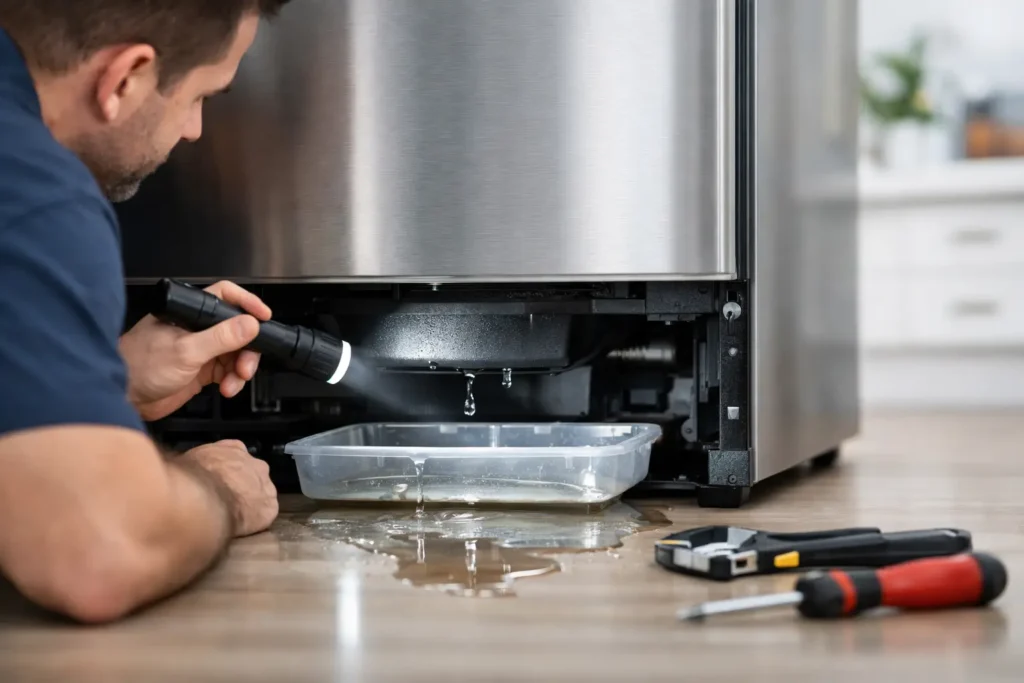
A puddle under the refrigerator usually shows up at the worst time – before work, during dinner prep, or right after a grocery run. If you’re searching for how to fix leaking refrigerator problems, the good news is that some causes are simple and safe to check. The less good news is that water leaks can also point to a drainage issue, a damaged water line, or a problem that can get worse if it is ignored.
For homeowners, property managers, and small businesses, speed matters. A leaking refrigerator is not just a nuisance. It can damage flooring, create a slip hazard, and put food storage at risk. The key is to narrow down where the water is coming from before deciding whether this is a quick fix or a repair that needs professional attention.
First, identify where the water is showing up
Before you move the unit or start taking panels apart, look at the pattern of the leak. Water inside the fresh food section often points to a blocked defrost drain. Water pooling under or behind the refrigerator may come from the drain pan, a clogged line, a cracked water supply tube, or a loose connection at the inlet valve.
If your refrigerator has an ice maker or water dispenser, the water supply system becomes one of the first places to check. If it does not, the issue is more likely tied to condensation, defrost drainage, or door sealing.
Unplug the refrigerator before inspecting anything near electrical parts, and use towels to dry the area so you can tell if fresh water appears during your inspection.
How to fix leaking refrigerator problems safely
Some checks are reasonable for a homeowner. Others are better left to a certified technician. The safest rule is simple: if the fix involves basic cleaning, leveling, or visual inspection, it may be DIY-friendly. If it involves disassembly, electrical components, sealed systems, or active water line repairs, it is usually time to schedule service.
Check the defrost drain for a blockage
A clogged defrost drain is one of the most common reasons a refrigerator leaks. During the normal defrost cycle, water is supposed to flow through the drain into a pan underneath the appliance. When that drain is blocked by debris or ice, the water backs up and ends up inside the refrigerator or on the floor.
In many models, you can spot signs of this issue by looking for water under the crisper drawers or a sheet of ice at the back of the freezer floor. If accessible, flushing the drain with warm water can sometimes clear a minor blockage. Do not force anything sharp into the drain opening, since that can damage the line and turn a simple issue into a larger repair.
If the drain keeps freezing over or continues clogging, there may be an underlying component problem. That is where accurate diagnosis matters.
Inspect the water supply line
If your unit has an ice maker or dispenser, pull the refrigerator forward carefully and inspect the water line behind it. Look for cracks, kinks, moisture at the connections, or signs of slow dripping. Even a very small leak can create a steady puddle over time.
A loose fitting may be simple to correct. A damaged line is different. Water line materials, connection types, and valve setups vary by model, so there is some risk in guessing. Tightening the wrong part too much can crack a fitting. Replacing the line with the wrong type can create another leak later.
Make sure the refrigerator is level
A refrigerator that tilts too far forward or to one side can affect how water drains during defrost cycles. It can also keep doors from sealing properly. Most units should be slightly tilted back so the doors close fully and drainage works as intended.
Use a level if you have one, and check the front feet or rollers. Small adjustments can make a real difference. If the appliance is hard to move, built into cabinetry, or sitting unevenly because of flooring issues, it may be better not to force it.
Look at the drain pan underneath
Not every drain pan problem means the pan is cracked. In some cases, the pan is simply out of place, overfilled because of another drainage issue, or difficult to inspect without partially disassembling the lower rear area.
If you can safely access it, check for visible cracks or obvious overflow. If the pan is damaged, it will need the correct replacement part for your model. If the pan is full and not evaporating normally, that usually means there is another issue upstream causing too much water to collect.
Check the door gaskets
Worn, torn, or dirty door gaskets allow warm air into the refrigerator. That extra moisture can create condensation and water buildup, especially in humid weather or busy households where doors are opened often.
Run your hand along the gasket and look for gaps, brittleness, or mold buildup. Clean it with mild soap and warm water, then see if it seals evenly all the way around. A damaged gasket can usually be replaced, but fit and alignment matter. An improperly installed gasket may still leak air and moisture.
When the leak is not a simple DIY issue
If you have already cleaned visible drains, checked the door seal, and inspected the supply line without finding a clear cause, the next step should be professional diagnosis. Refrigerators can leak because of a faulty water inlet valve, a frozen internal drain, airflow issues, installation problems, or hidden line damage inside the cabinet.
This is where many people lose time and money. They replace a part based on a guess, the leak returns, and now there is a second problem to sort out. For high-use households, multi-unit properties, and small commercial settings, downtime adds up quickly.
A certified, fully insured technician can trace the leak correctly, explain the repair clearly, and give you upfront pricing after diagnosis. That approach is usually faster than trial-and-error, especially when the refrigerator is a premium model or integrated into a larger kitchen setup.
Signs you should call for service now
Some leaks should not wait. If you notice water near wiring, repeated puddles after cleaning, active dripping from the back of the unit, or inconsistent cooling along with the leak, it is time to stop troubleshooting and book service.
The same goes for leaks in apartments, shared buildings, and commercial spaces where water can damage neighboring units, cabinets, or finished floors. What starts as a small refrigerator leak can quickly turn into a bigger property issue.
If fast scheduling matters, working with a company that handles diagnosis and repair the right way matters too. United Technical Services serves Northern New Jersey with certified technicians, clear communication, and upfront pricing after diagnosis – so the repair is done right the first time.
How to prevent future refrigerator leaks
Prevention is usually less complicated than repair. Keep the door gaskets clean, avoid overpacking vents inside the refrigerator, and pay attention to early signs like condensation, minor drips, or ice buildup where it should not be.
If your refrigerator has a water dispenser or ice maker, inspect the visible water line from time to time. After any move, flooring work, or appliance repositioning, make sure the line is not kinked and the unit still sits level.
It also helps to avoid delaying service when performance changes. A refrigerator rarely goes from perfect to leaking overnight without some smaller warning signs first. Catching those signs early can protect both the appliance and the surrounding space.
The real trade-off: quick DIY check or professional repair
There is nothing wrong with doing a few safe checks yourself. In fact, clearing a minor drain blockage or cleaning a dirty gasket may solve the issue. But refrigerator leaks are one of those problems where the trade-off is real. A quick DIY attempt can save time if the cause is simple. If the cause is hidden, it can also delay the proper fix while water keeps spreading.
For most people, the smartest move is to spend a few minutes identifying the source, then make a clear decision. If the leak is obvious and minor, address it safely. If the source is unclear, recurring, or tied to the water system, bring in a professional who can diagnose it accurately and restore normal operation without guesswork.
A leaking refrigerator does not always mean a major repair, but it does deserve a prompt one. The sooner the cause is identified, the easier it is to protect your food, your floors, and your routine.