
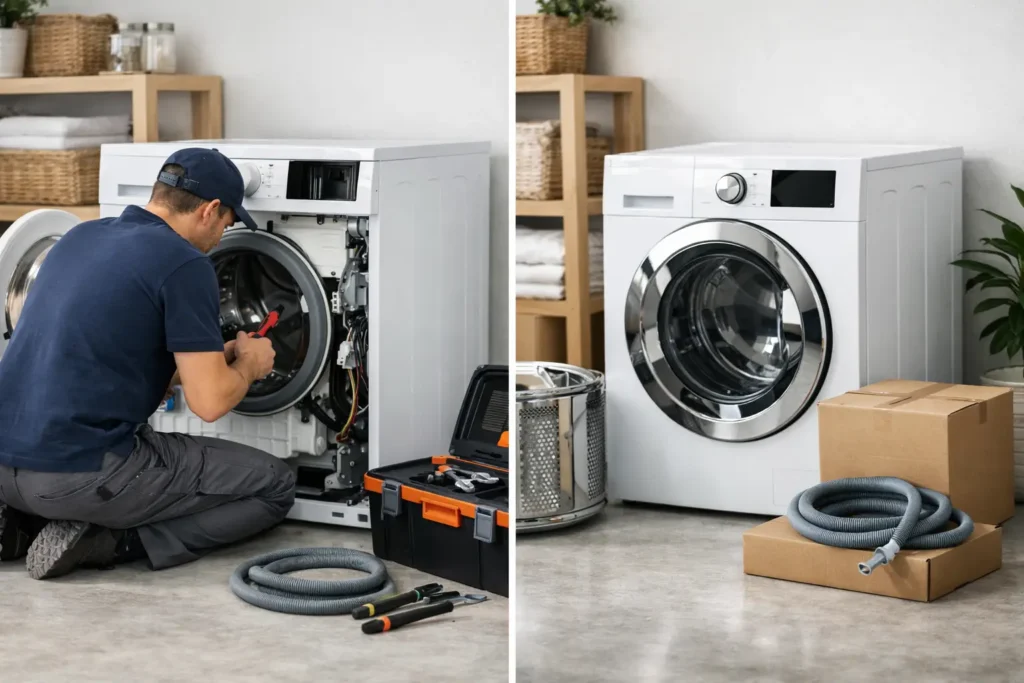
A washer that stops mid-cycle can turn a normal day into a mess fast. For most homeowners, property managers, and small businesses, washer repair is not something to put off for a week and hope for the best. Wet laundry, standing water, strange noise, or a machine that will not spin usually means the problem is already affecting more than one load.
That is why the first question is rarely just, “Can this be fixed?” The better question is, “Does repairing this washer make practical sense right now?” Sometimes the answer is yes, and a professional diagnosis gets the unit back in service quickly. Sometimes the smarter move is replacement, especially when age, part availability, and repeat failures start working against you.
When washer repair makes sense
In many cases, washer repair is the fastest and most cost-effective path. A washer that will not drain, shakes violently, leaks during fill, or fails to latch properly may still be a solid candidate for repair if the core system is in good condition.
This is especially true when the machine is relatively new or has otherwise been dependable. Drain pumps, door locks, inlet valves, belts, suspension components, and certain control issues can often be addressed without replacing the entire appliance. For households trying to keep routines on track, or for property managers trying to reduce tenant disruption, a targeted repair can restore service without the cost and delay of shopping for a new unit.
The brand and model matter too. Some washers are built to last longer and justify a professional repair even after several years of use. Others, especially lower-cost models with repeated electronic problems, may become less practical once a major component fails. This is where accurate diagnosis matters. The goal is not just to get the machine running again for today. The goal is to fix it right the first time and avoid another service call for the same issue a few weeks later.
Signs your washer needs repair now
Some problems are annoying. Others are early warnings that can turn into water damage, electrical risk, or a full breakdown. If your washer shows any of the following, scheduling service sooner is usually the safer move.
Water where it should not be
Leaks around the front, back, or underneath the unit can come from hoses, a drain issue, a door boot, an internal seal, or an overfilling problem. The source is not always obvious from the outside. What looks minor can damage flooring, walls, or nearby cabinetry if ignored.
Loud banging, grinding, or scraping
A washer should make some noise, but it should not sound violent. Repeated banging during spin may point to worn suspension parts, an unbalanced drum, or support issues. Grinding and scraping can suggest bearing or drive problems. These are not good candidates for guesswork.
It will not spin or drain
If the washer finishes with soaked clothes, the issue could involve the drain pump, lid switch, control board, belt, or motor-related components. The symptom sounds simple, but the cause often is not. Replacing the wrong part wastes time and money.
Burning smells or tripped breakers
This is the point where DIY should stop. Electrical symptoms need professional attention, especially in homes, apartment buildings, and commercial settings where safety and liability matter. A certified, fully insured technician can diagnose the problem clearly and recommend the right next step.
When replacement may be the better call
Not every washer should be repaired. A professional should say that plainly.
If the unit is older, has a history of repeat failures, and now needs a major high-cost part, replacement may be the more practical investment. The same applies if rust, structural damage, or multiple failing systems are involved. A washer can be technically repairable and still not be worth repairing.
Age is one factor, but not the only one. Availability of parts can change the equation. If a key component is discontinued or delayed, waiting may not be realistic for a family, tenant-occupied building, or business that depends on laundry equipment. Reliability after repair also matters. If one major repair is likely to be followed by another soon, replacement may offer better long-term value.
A disciplined service company will not push repair at any cost. The right approach is straightforward diagnosis, clear communication, and upfront pricing after diagnosis so you can make an informed decision without pressure.
What professional washer repair should include
Good service is not just showing up with tools. It starts with diagnosis.
A washer can fail for reasons that look similar on the surface but require very different repairs. A no-spin complaint could be a simple latch issue or a more expensive control or drive-system failure. A leak could come from an external hose or a hidden internal component. Without a proper diagnostic process, repair becomes trial and error.
That is why professional washer repair should include a full evaluation of the symptom, the machine’s condition, and the likely durability of the fix. You should get clear communication about what failed, what it will take to repair it, and whether the repair makes sense for that model and age. Upfront pricing after diagnosis matters because it removes surprises and gives you a real choice.
For homes and businesses, professionalism inside the space matters too. Certified technicians, fully insured service, and respect for your time are not extras. They are part of the job. If the washer is in a laundry room, basement, apartment unit, or commercial area, the work should be handled safely and cleanly.
Common washer problems and what they often mean
A few symptoms show up again and again in service calls.
If a front-load washer smells bad, the issue may be buildup from detergent residue, trapped moisture, or a drainage problem rather than a failed part. If the washer fills slowly, the water inlet valve or supply issue may be involved. If it walks across the floor, leveling may be part of the problem, but worn suspension components are also common.
Digital errors add another layer. Error codes can help narrow the issue, but they do not replace testing. Two washers may show the same code for different underlying reasons. Resetting the unit may clear the display temporarily without solving the actual fault.
That is one reason online advice has limits. It can be useful for basic checks like confirming the outlet has power or making sure the water supply is on. Beyond that, the risk of misdiagnosis climbs fast.
Why speed matters in washer repair
A broken washer is rarely just a mechanical inconvenience. It affects schedules, living spaces, tenant satisfaction, and in some cases business operations.
For homeowners, laundry piles up immediately. For property managers, one failed washer can trigger multiple complaints in a shared facility or occupied unit. For businesses, downtime means disruption and lost productivity. Fast scheduling matters because delay tends to make the situation harder, not easier.
The best service response balances speed with accuracy. Same-day availability when possible is valuable, but only if the technician arrives prepared to diagnose the problem correctly and explain the options clearly. Rushed guesswork is not helpful. Efficient, accountable service is.
Choosing a washer repair company
If you need service, look for a company that leads with trust and process, not vague promises. Certified and fully insured technicians, clear communication, and upfront pricing after diagnosis are strong indicators that the company is built to solve the problem professionally.
It also helps to choose a team that works on both standard residential models and premium appliances. Experience across brands usually means better diagnostics and fewer wasted steps. If you are responsible for multiple units or commercial equipment, responsiveness and consistency matter even more.
At https://unitedtechnical-services.us/, the focus is simple: fast scheduling, accurate diagnosis, and repairs done right the first time. That is the standard customers should expect when an essential appliance goes down.
Before you schedule service
There are a few reasonable checks you can make before calling. Confirm the washer is plugged in, the breaker has not tripped, the water valves are open, and the load is not severely unbalanced. If the drain hose is obviously kinked, straighten it. If the machine is showing an error code, make note of it.
After that, avoid taking the machine apart unless you are trained to do so. Modern washers combine water, electronics, moving parts, and weight in a way that makes casual repair risky. A quick fix that goes wrong can easily turn a repairable problem into a more expensive one.
The right next step is simple: get a professional diagnosis, ask clear questions, and make the decision based on cost, condition, and expected reliability. A good washer repair experience should leave you with more than a working machine. It should leave you confident that the problem was handled properly and your time was respected.