
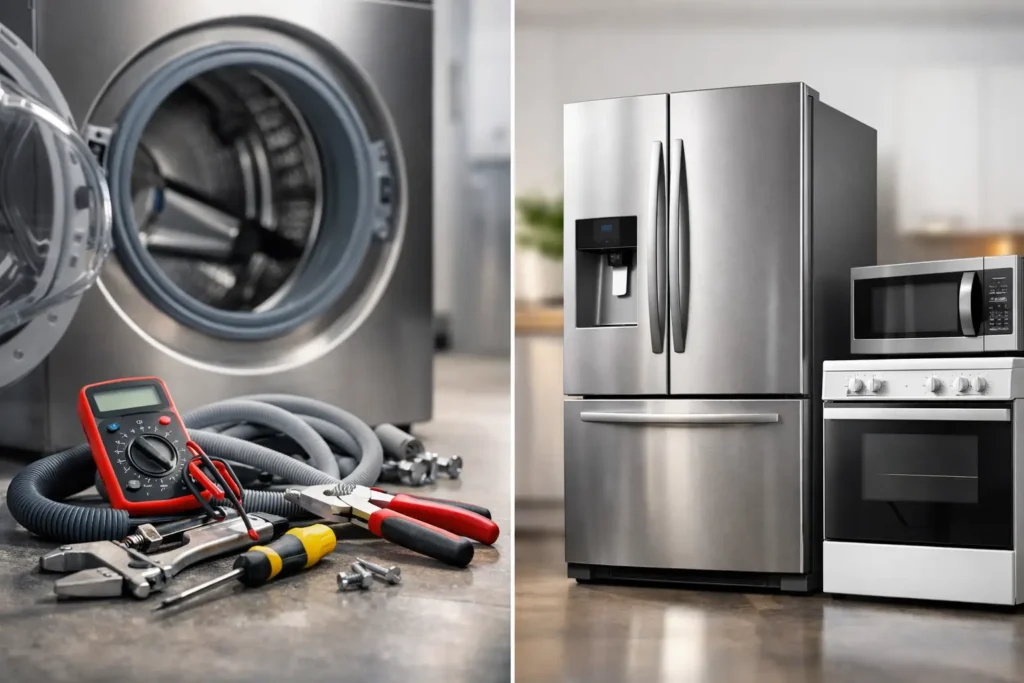
A refrigerator stops cooling the night before a grocery run. A washer quits with a full load inside. A commercial dryer goes down and tenants start calling. In moments like that, the real question is not just what broke – it is appliance repair vs replacement, and which choice makes the most sense for your budget, timeline, and long-term peace of mind.
For most homes and businesses, this decision is less about the sticker price and more about total disruption. A quick repair can get life back on track fast. But there are times when putting money into an aging unit only delays a bigger expense. The right move depends on the appliance’s age, the type of failure, the cost of parts, and whether the machine can be returned to safe, reliable operation.
How to think about appliance repair vs replacement
The simplest way to look at appliance repair vs replacement is this: if the repair solves the problem safely, at a reasonable cost, and gives you dependable service afterward, repair is usually the smart call. If the unit is near the end of its expected life, has multiple failing components, or poses safety concerns, replacement often makes more financial sense.
That sounds straightforward, but real situations are rarely that clean. A premium refrigerator may be worth repairing even with a higher repair bill because replacement costs are steep. A lower-cost dishwasher with repeat issues may not deserve another service call. A commercial appliance might be repaired quickly to reduce downtime, even if replacement is eventually planned.
That is why accurate diagnosis matters first. Guessing based on one symptom can lead to the wrong decision and more expense.
Start with age, but do not stop there
Age is one of the first filters. Most major appliances have a typical service life, but those numbers are not promises. Maintenance history, usage, brand quality, and installation conditions all matter.
Washers and dryers often give solid service for many years, but heavy family use or shared laundry settings can wear them down faster. Dishwashers and microwaves may become less economical to repair as they age because replacement prices are often more manageable. Refrigerators, ranges, and premium built-in units tend to deserve a closer look before replacement because their value is higher and a targeted repair can still be worthwhile.
Still, age alone should not decide it. A six-year-old refrigerator with a sealed system issue may be a bigger decision than a twelve-year-old dryer needing a belt or thermal fuse. One problem is complex and expensive. The other can be straightforward and cost-effective.
The repair cost rule people use – and where it falls short
Many people rely on the 50% rule. If the repair costs less than half the price of a comparable new appliance, repair may be worth considering. If it is more than half, replacement starts to look stronger.
That rule is useful, but it is not perfect. It does not account for installation changes, delivery delays, disposal fees, or the higher cost of replacing built-in or premium appliances. It also does not measure disruption. If a property manager needs a shared laundry machine back online quickly, a reliable repair now may be the better operational choice, even if replacement is coming later.
There is also the issue of repeat failures. A repair that costs 30% of replacement can still be a poor decision if another major component is likely to fail soon. This is where a professional diagnosis and honest recommendation matter. You need to know not only what failed, but what condition the rest of the machine is in.
When repair usually makes sense
Repair is often the right move when the appliance is still within a reasonable service window and the problem is limited to one component. A bad igniter in an oven, a clogged drain pump in a washer, a worn dryer roller, or a failed dishwasher latch can often be addressed without turning the appliance into a money pit.
Repair also makes sense when the unit is high-end or built into the kitchen. Premium brands and custom-fit appliances cost more to replace and can involve longer lead times. In those cases, a professional repair may restore performance faster and at a much lower total cost.
Another strong case for repair is when the appliance has been reliable until now. One isolated failure is very different from a pattern of service calls. If the machine has otherwise performed well, a properly diagnosed repair can be the practical choice.
When replacement is the better call
Replacement usually becomes the smarter option when the appliance has multiple problems, visible wear, or a history of breakdowns. If a refrigerator is not cooling properly, has compressor issues, damaged door seals, and electronic control problems, the cost and uncertainty can add up quickly.
Safety is another clear line. If the appliance has electrical hazards, gas-related concerns, or repeated overheating issues, replacement may be the responsible decision, especially if parts are discontinued or reliability is in question. A repair should never be a temporary patch on an appliance that cannot be returned to safe operation.
Replacement is also worth stronger consideration when parts are hard to source. That is especially relevant for older units and some discontinued models. Even if the diagnosis is clear, delays and part costs can turn a repair into a slow, frustrating process.
Downtime matters more than most people expect
For households, downtime means missed routines, spoiled food, or piles of laundry. For property managers and businesses, it means complaints, schedule disruptions, and lost productivity. That is why the right decision is not always the cheapest on paper.
A fast, accurate repair can be the best business decision because it restores operations quickly. On the other hand, if the appliance is likely to fail again soon, replacement may reduce repeated disruption. The key is being realistic about reliability after the repair, not just whether the machine can be made to run today.
This is where service quality matters. Certified, fully insured technicians who provide upfront pricing after diagnosis help you make the call with real information, not guesswork. If the recommendation is repair, you should know why. If the recommendation is replacement, you should know what makes repair a poor investment.
Appliance-by-appliance reality check
Refrigerators and freezers usually deserve careful evaluation because failure is urgent and replacement costs can be high. A fan motor, thermostat, or defrost issue may make repair worthwhile. Sealed system or compressor problems can be more complicated.
Washers and dryers are often good repair candidates when the issue is mechanical and isolated. Pumps, belts, rollers, switches, and heating components can often be replaced efficiently. But repeated leaks, major bearing wear, or multiple electronic failures can shift the balance toward replacement.
Dishwashers sit in the middle. A single pump or inlet valve problem may justify repair. But if an older unit is leaking, washing poorly, and developing control issues, replacement often makes better sense.
Ovens, ranges, and cooktops are frequently worth repairing, especially when the issue involves igniters, elements, sensors, or control components. Since cooking appliances tend to have longer useful lives, repair can be the right move even when the unit is not new.
Microwaves are more case-specific. Countertop units are often easier to replace, while built-in models can justify repair because replacement is more involved.
Why diagnosis should come before the decision
The biggest mistake people make is deciding too early. They assume a strange noise means the appliance is finished, or they approve a replacement without knowing that the problem is a manageable repair. The opposite happens too – money goes into a machine that should have been retired.
A disciplined process works better. Diagnose the exact failure. Review the condition of the appliance as a whole. Compare repair cost with replacement cost, expected life, and downtime impact. Then decide.
That is the value of clear communication and upfront pricing. You are not being pushed toward the bigger invoice. You are getting the information needed to make a sound call for your home, property, or business. If you are in Northern New Jersey or nearby service areas, United Technical Services can help you make that decision with certified technicians, fast scheduling, and repairs done right the first time.
The best choice is not always repair, and it is not always replacement. It is the option that restores reliability, controls cost, and keeps your day moving without surprises.