
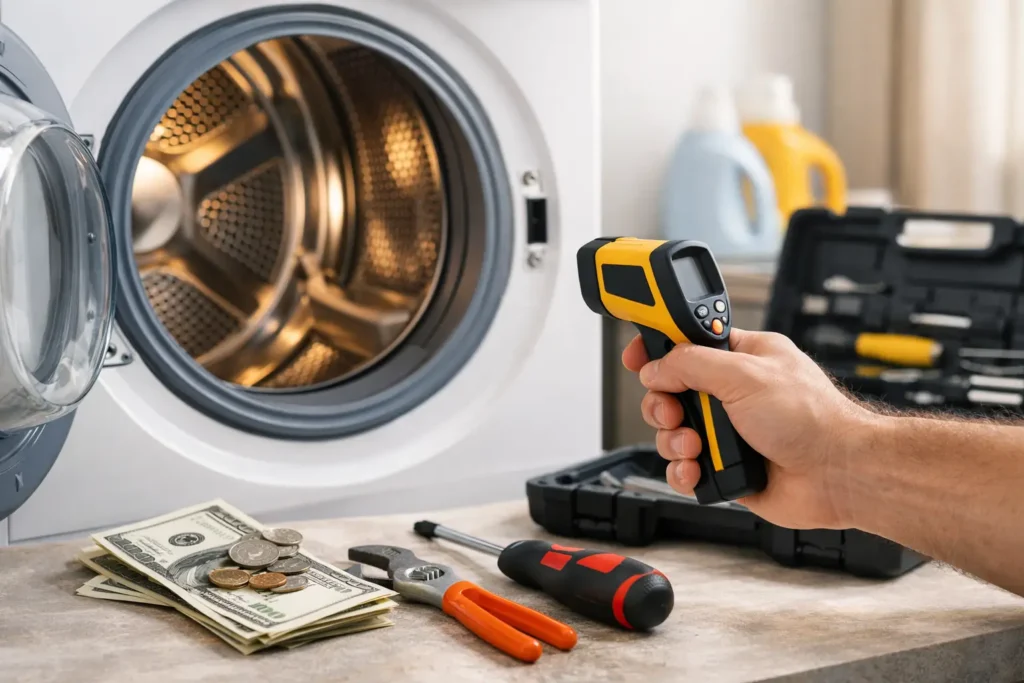
A dryer that runs but leaves clothes cold and damp usually creates the same problem fast – laundry backs up, routines get off track, and nobody wants to guess at repair costs while a machine sits unusable.
If you are trying to understand dryer not heating repair cost, the honest answer is that the final number depends on what failed, how long diagnosis takes, and whether the unit is gas or electric. What matters most is getting the problem identified correctly first. A dryer that is not heating can have a relatively simple failed component, or it can point to airflow, electrical, ignition, or control issues that need a more careful repair.
For homeowners, property managers, and businesses, the best path is straightforward: accurate diagnosis, clear communication, and upfront pricing before work begins. That is how you avoid paying for the wrong repair and having the same problem come back.
What affects dryer not heating repair cost?
The biggest factor is the failed part itself. Some no-heat repairs involve common wear items such as a thermal fuse, heating element, igniter, or thermostat. Others involve wiring, a control board, a gas valve coil, or a motor-related issue that requires more labor and deeper testing.
Labor also matters. Two repairs can use similarly priced parts but have different total costs because one is quick to access and the other requires more disassembly. Dryer design varies by brand and model, and premium or stacked units can take more time than a standard front-load or top-load configuration.
The service model matters too. Reputable companies typically charge for diagnosis, then provide upfront pricing after the issue is confirmed. That protects you from vague estimates and gives you a chance to approve the repair before any work moves forward.
In practical terms, many no-heat dryer repairs fall into a moderate repair range rather than a full appliance replacement range. But there is no responsible flat price that fits every case. If anyone quotes one number for every dryer not heating call without inspecting the machine, that is usually a red flag.
Typical dryer not heating repair cost by issue
Most customers want a ballpark before scheduling, and that is reasonable. While exact pricing varies by model and part availability, these are the kinds of repairs that commonly affect dryer not heating repair cost.
A failed thermal fuse or thermostat is often on the lower end of the repair spectrum, especially when access is straightforward. A heating element replacement in an electric dryer usually lands in the mid-range because the part costs more and labor can vary by design.
For gas dryers, an igniter or gas valve coil issue may also fall into a mid-range repair, assuming there are no related electrical or control problems. If the failure involves a control board, damaged wiring, or multiple failed components caused by overheating, the total cost can climb more quickly.
There is also the less obvious case: the dryer itself may be fine, but restricted venting has caused overheating and repeated safety shutoff issues. In that situation, the repair may involve replacing a failed safety part and correcting the airflow problem so the same failure does not happen again.
That is why a good technician does not stop at the first failed component. The goal is to fix the cause, not just the symptom.
Common no-heat problems and how they change the repair
Heating element failure
In electric dryers, the heating element is one of the most common reasons for no heat. When it burns out, the drum may still tumble normally, which can make the machine seem half-functional. Replacing the element is usually a standard repair, but some models are more labor-intensive than others.
Thermal fuse or thermostat failure
These parts are often safety-related and may fail if the dryer overheats. The repair itself may be relatively manageable, but the more important question is why the overheating happened. If lint buildup or poor vent airflow caused the failure, that needs to be addressed or the new part may fail again.
Gas dryer ignition problems
Gas dryers add another layer to diagnosis. The issue may be an igniter, flame sensor, gas valve coils, or even a supply problem. Because several components work together in the heating cycle, proper testing matters. Guessing at parts gets expensive quickly.
Power supply or wiring issues
An electric dryer can tumble with only part of the required voltage, which leads some owners to assume the heater itself is bad. In reality, the problem may be the outlet, breaker, cord, terminal block, or internal wiring. This is one reason certified service is worth it. Heating problems can involve live electrical systems and should be handled safely.
Control board or sensor problems
These are less common than basic heating-part failures, but they do happen, especially on newer dryers with more electronics. When control-related parts fail, repair costs can be higher. At that point, it often makes sense to compare the repair estimate against the dryer’s age and overall condition.
Repair or replace? It depends on the dryer
A no-heat issue does not automatically mean you need a new dryer. In many cases, repair is the better value, especially when the machine is otherwise in good condition and the failed component is a routine service part.
The decision changes when the dryer is older, has had multiple recent issues, or needs a high-cost electronic part on top of other wear. If the drum rollers are loud, the belt is worn, the vent system has been neglected, and now the control board has failed, replacement may be the more practical long-term move.
For property managers and commercial operators, downtime matters just as much as raw cost. A repair that restores safe, reliable operation quickly is often the right choice even if it is not the cheapest possible option on paper. Predictable service and reduced disruption have real value.
Why diagnosis matters more than online price ranges
Online articles often throw out broad repair ranges, but those numbers can mislead more than they help. They rarely account for local labor rates, premium appliance configurations, stacked laundry access, or whether the real problem is inside the dryer or in the electrical supply or venting.
A disciplined service process works better. First, the technician confirms the failure. Then you get clear communication and upfront pricing based on the actual issue. That way, you are approving a real solution, not a rough guess.
This is especially important with no-heat complaints because several different failures can produce the same symptom. The dryer may run, the timer may advance, and the drum may spin, but the fix can still vary a lot from one unit to the next.
How to avoid paying for repeat dryer repairs
The cheapest repair is not always the lowest final bill. If the wrong part gets installed, or the underlying airflow problem is missed, you can end up paying twice.
A professional repair should include a full check of the heating circuit, safety components, and basic airflow conditions. If vent restriction contributed to the failure, you should be told that clearly. If the machine is unsafe to run until the vent issue is corrected, that should be explained directly.
This is where certified, fully insured service makes a difference. You want the repair done right the first time, with the problem documented and the next step clearly laid out. That is better for homeowners, and it is essential for rental properties and businesses where appliance downtime can turn into a larger operational issue.
What to expect when you schedule service
When you book a dryer no-heat call, expect the visit to start with diagnosis, not immediate part replacement. A technician should inspect the unit, test the likely failure points, and explain what caused the heating problem. After that, you should receive upfront pricing before repair work proceeds.
That process protects your time and your budget. It also keeps the conversation practical. You are not being sold a generic fix. You are being shown the actual repair option, the likely result, and whether the investment makes sense for your machine.
For customers in Northern New Jersey and nearby service areas, United Technical Services follows that exact model – fast scheduling when possible, clear communication on-site, and upfront pricing after diagnosis so there are no avoidable surprises.
If your dryer is running without heat, waiting usually does not make the repair easier. A prompt diagnosis gives you a clear answer, a safer appliance, and one less disruption hanging over the week.