
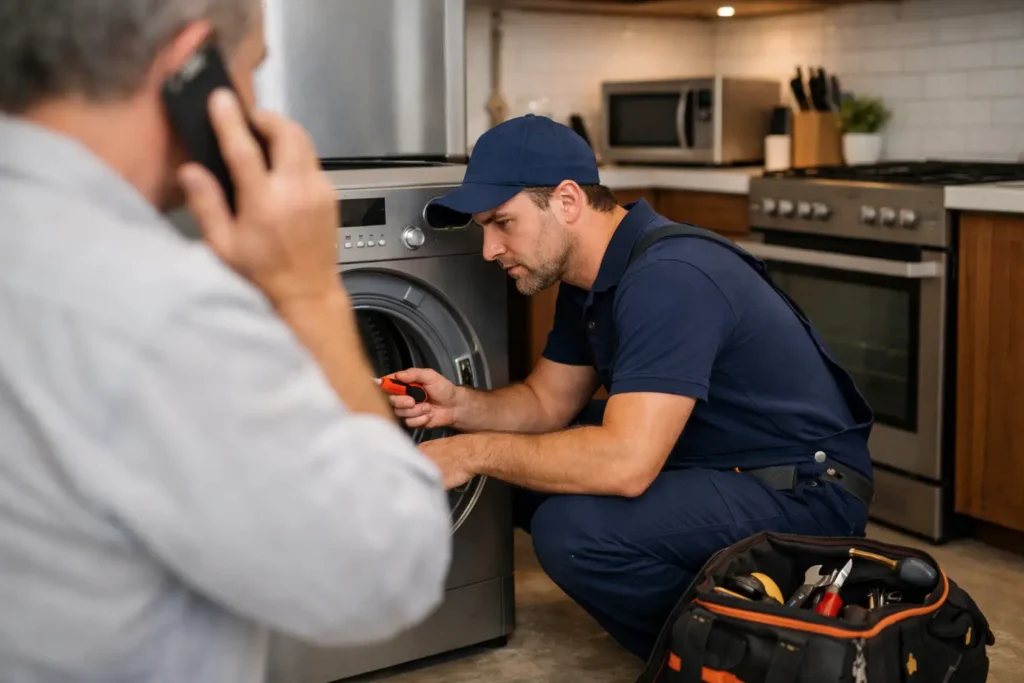
A tenant calls at 9:30 p.m. because the refrigerator stopped cooling, or the washer is leaking into the unit below. That is when emergency appliance repair for landlords stops being a routine maintenance issue and becomes a risk management decision. The right response protects your property, keeps tenants safer, and limits downtime that can quickly turn into bigger costs.
For landlords and property managers, appliance failures are rarely just about the appliance. A broken dryer can disrupt an entire household. A failed refrigerator can lead to food loss and angry calls. A leaking dishwasher can damage flooring, cabinets, and neighboring units. In multi-unit properties, one delayed repair can affect several tenants at once.
What counts as an appliance emergency?
Not every repair needs same-day service, but some problems should move to the top of the list immediately. The most urgent cases usually involve water, heat, electrical risk, or loss of an essential appliance.
A refrigerator or freezer that stops cooling is often urgent, especially in an occupied rental. A washer that is overflowing or a dishwasher that is leaking can create property damage fast. An oven or range with a gas smell, sparking, or inconsistent heating raises obvious safety concerns. A dryer that will not stop running hot, shuts down repeatedly, or gives off a burning odor also deserves immediate attention.
Other issues may be important without being true emergencies. A microwave with a failed turntable is inconvenient, but it is not in the same category as a refrigerator failure or an active leak. The trade-off matters because sending emergency service for a non-emergency issue can increase costs without changing the outcome.
Why fast emergency appliance repair for landlords matters
A delayed response usually costs more than the repair itself. That is especially true in rentals, where appliance downtime affects habitability, tenant satisfaction, and turnover risk.
When a refrigerator goes down, tenants may expect reimbursement questions before the day is over. When a washer leaks, the problem can spread to subflooring, drywall, and ceilings below. Even when the damage is limited, the tenant remembers how quickly the issue was handled. Speed does not just solve the mechanical problem. It shows that management is responsive and organized.
That is why landlords tend to value fast scheduling, clear communication, and repairs done right the first time. A technician who diagnoses the real cause, explains the repair clearly, and provides upfront pricing after diagnosis helps you make a decision quickly without adding confusion to an already urgent situation.
The landlord’s first steps before the technician arrives
When an emergency call comes in, the first job is to reduce immediate risk. Ask the tenant what the appliance is doing, not just that it is broken. Is water actively leaking? Is there a burning smell? Did the breaker trip? Is the refrigerator warm, or is the freezer still cold? Specific details help separate a dangerous condition from a standard repair.
If there is active leaking, have the tenant shut off the appliance if possible and avoid running it again. If there is a strong burning smell, smoke, or visible sparking, the appliance should stay off until it is inspected. If a gas appliance is involved and there is any gas odor, the tenant should leave the area and follow the proper safety steps immediately.
Then document the issue with photos and a short written timeline. That protects you if there is property damage later, and it gives the repair company useful context before arrival. In a multi-unit building, it also helps you communicate with affected tenants without relying on secondhand descriptions.
What to expect from a reliable emergency service call
Landlords need more than a technician who can replace a part. They need a service process that reduces downtime and avoids repeat visits caused by poor diagnostics.
A dependable emergency repair company should be able to schedule quickly when possible, arrive prepared to diagnose the issue on site, and explain what failed in plain language. Certified and fully insured technicians matter here. In an occupied rental, professionalism inside the unit is part of the service. So is accountability.
Clear communication is just as important as technical skill. You should know whether the appliance is repairable, whether parts are needed, and whether the unit is safe to use in the meantime. You should also get upfront pricing after diagnosis so there are no surprises before work begins.
That kind of process is especially valuable for landlords managing several properties. You do not have time to chase vague updates or approve work without a clear explanation. You need a decision-ready diagnosis, realistic timing, and confidence that the repair will hold.
Emergency appliance repair for landlords by appliance type
Refrigerators and freezers usually move to the front of the line because lost cooling affects daily living right away. In many cases, the issue could be a failed compressor relay, fan motor problem, thermostat fault, or sealed system concern. The real priority is confirming whether the unit can be restored quickly or whether temporary accommodation is needed.
Washers and dishwashers become emergencies when water is involved. A machine that will not drain may be manageable for a few hours. A machine that is actively leaking is different. Fast diagnosis can prevent a small repair from turning into flooring, drywall, or mold expenses.
Dryers can create both convenience issues and safety risks. If a dryer simply will not start, that may be urgent but contained. If it overheats, smells like something is burning, or shuts off unpredictably, the risk level changes. The same applies to ovens, ranges, and cooktops. Uneven heating may be a normal service call. Electrical arcing, gas odor, or failure to shut off is an emergency.
Microwaves are usually lower priority unless there is a sparking issue, electrical smell, or obvious power problem affecting more than the appliance itself.
Choosing the right repair partner for rental properties
The wrong service partner can make an urgent situation harder. Slow callbacks, unclear pricing, and missed diagnoses create repeat disruptions for tenants and wasted time for landlords.
Look for a local company that regularly handles major kitchen and laundry appliances, including both common household brands and premium units. If your properties include higher-end appliances, that experience matters. A technician who understands the equipment is more likely to diagnose accurately on the first visit.
It also helps to work with a company that understands property operations. That means respect for access windows, communication with tenants or managers, and documentation that makes follow-up easier. If same-day availability is offered when possible, that can be a major advantage during peak rental issues.
For landlords in Northern New Jersey and nearby service areas, United Technical Services is built around that model – certified and fully insured technicians, fast scheduling, clear communication, and upfront pricing after diagnosis. The goal is simple: minimize downtime and get the repair done right the first time.
How emergency repairs fit into a smarter maintenance plan
Emergency service is necessary, but it should not be your only strategy. The more units you manage, the more useful it becomes to track repeat failures, appliance age, and seasonal issues.
For example, refrigerators often struggle more during summer heat, while dryers and washers see heavy wear in family rentals and shared laundry settings. A unit with repeated repair history may still be repairable, but replacement can become the better financial decision if downtime is recurring and tenant disruption keeps growing.
That is where an honest diagnosis matters. Not every appliance should be repaired at all costs. Sometimes the best service call is the one that tells you clearly when repair is no longer the practical option. A trustworthy technician will explain that trade-off instead of pushing a short-term fix that does not make sense.
Landlords do best when they treat appliance emergencies as both a service issue and an asset protection issue. Fast action protects the tenant experience. Accurate diagnostics protect the property. Clear pricing protects your budget.
When the next urgent call comes in, the goal is not just to get someone out there quickly. It is to get the problem diagnosed correctly, handled safely, and resolved with as little disruption as possible. That is how you keep rentals running, tenants informed, and small problems from becoming expensive ones.