
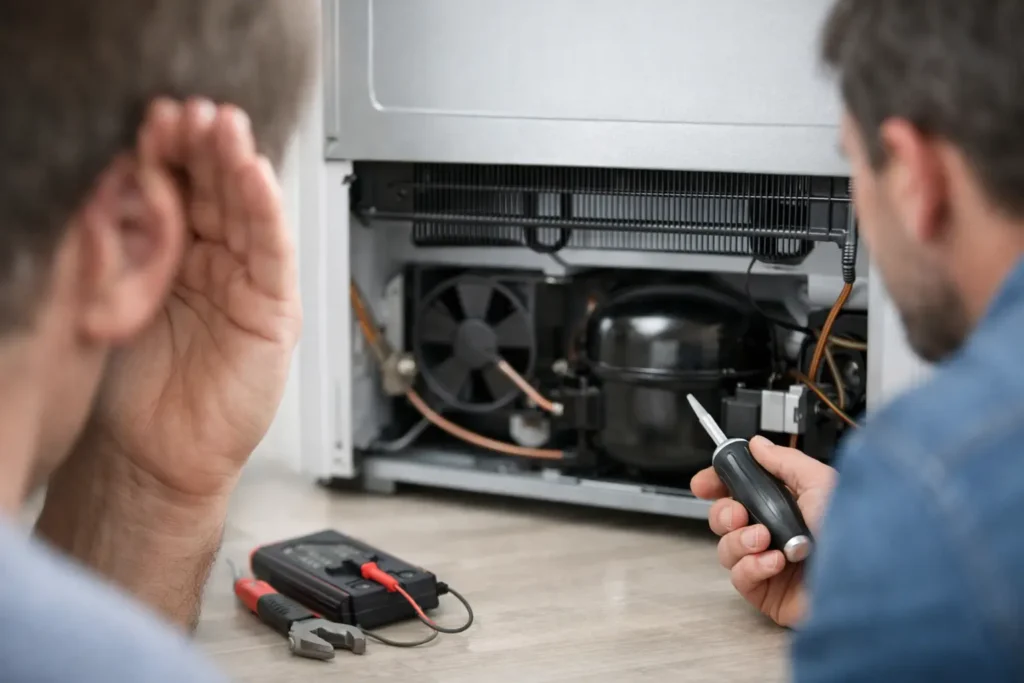
A freezer that suddenly starts buzzing, rattling, clicking, or grinding is hard to ignore – and for good reason. Loud freezer noise usually means a part is working harder than it should, coming loose, icing over, or beginning to fail. Sometimes the fix is simple. Sometimes the sound is an early warning that you have a bigger repair coming.
If you want a freezer making loud noise fix, the right first step is figuring out what kind of noise you are hearing and when it happens. That helps narrow down whether you are dealing with a leveling issue, a fan problem, a compressor concern, or something less serious like ice buildup or items vibrating inside the cabinet.
Start with the noise itself
Not every freezer sound means trouble. A light hum, a soft whoosh, or occasional clicking during normal cooling cycles can be completely normal. What is not normal is a noise that suddenly gets louder, repeats constantly, or sounds metallic, aggressive, or uneven.
A rattling sound often points to vibration. The freezer may not be sitting level, the drain pan may be loose, or the unit may be too close to the wall or cabinetry. A buzzing sound can come from the compressor, condenser fan, or even the ice maker if your unit has one. A grinding or scraping sound usually deserves faster attention because it can mean the evaporator fan blades are hitting ice or a failing motor is wearing out.
The timing matters too. If the noise happens when the freezer door is closed but changes when you open it, the evaporator fan is a likely suspect. If the sound comes from the rear bottom section of the appliance, the condenser fan or compressor may be involved.
Freezer making loud noise fix checks you can do safely
Before assuming you need a major repair, there are a few practical checks worth making. These are safe, basic steps that can solve minor noise problems or at least make the source clearer.
Make sure the freezer is level
A freezer that rocks slightly can create a surprising amount of noise. Put a hand on the top corners and see if the cabinet shifts. If it does, the leveling legs may need adjustment. An uneven freezer can vibrate through the floor and make a small sound seem much louder than it is.
If the unit was recently moved, cleaned behind, or installed on an uneven surface, this is one of the first things to check.
Pull it away from the wall
If the back of the freezer is touching the wall, water line, baseboard, or adjacent cabinet, normal operating vibration can turn into a constant rattling noise. Give it a little breathing room. While you are there, make sure nothing has fallen behind the appliance.
Check for items vibrating inside
Containers, bins, shelves, and frozen food packages can all shift over time. A loose shelf or tray can chatter during the cooling cycle. Rearranging a crowded freezer is not glamorous, but it can solve a noise complaint faster than many people expect.
Look for frost buildup
Heavy frost around vents or the back interior panel can interfere with airflow and cause the evaporator fan to hit ice. That often creates a scraping, ticking, or grinding sound. If you see significant frost, do not start prying at ice with a sharp tool. You can damage the liner or hidden components very quickly.
In some cases, a full manual defrost may quiet the unit temporarily. But if frost returns, the real issue may be a defrost system problem, bad door seal, or airflow failure.
The most common parts behind loud freezer noise
When a simple adjustment does not solve it, the next step is understanding which component is likely making the sound.
Evaporator fan motor
This is one of the most common causes of loud freezer noise. The evaporator fan circulates cold air through the freezer and, on many refrigerator-freezer units, into the fresh food section as well. If the motor is failing, it may squeal, chirp, grind, or pulse loudly.
Ice around the fan can create a similar sound. In that case, the issue may not be the fan motor itself. It could be excess moisture, a door not sealing tightly, or a defrost issue allowing ice to build where it should not.
Condenser fan motor
The condenser fan is typically located near the compressor at the bottom rear of the appliance. Its job is to help release heat. If dust, debris, or a worn motor bearing affects that fan, you may hear buzzing, rattling, or a rough spinning sound.
This is a repair that often gets worse if ignored. Poor airflow around the compressor can affect cooling performance and put more strain on the system.
Compressor
Compressors do make noise during normal operation, but a compressor that becomes unusually loud deserves attention. A hard buzzing, knocking, or repeated clicking can point to trouble starting or running properly. Sometimes the issue is the start relay rather than the compressor itself. That distinction matters because one repair is much more manageable than the other.
This is where accurate diagnosis really counts. Guessing wrong can waste time and money.
Ice maker or water valve
If your freezer includes an ice maker, the sound may not be coming from the cooling system at all. A buzzing noise can happen when the water inlet valve tries to fill but does not have proper water flow. A jammed ice maker can also make clicking or knocking sounds.
This is one of those it-depends situations. If the noise only happens at certain times of day or in short cycles, the ice maker is worth checking.
When the freezer noise is a sign to stop using it
Some sounds are more than an annoyance. If the freezer is making a loud noise and you also notice weak cooling, thawing food, a burning smell, repeated clicking, or water leaking, it is smart to stop experimenting and get it checked.
That is especially true for homeowners managing a stocked freezer, property managers trying to avoid tenant loss claims, or businesses with temperature-sensitive inventory. A noisy freezer that is also struggling to hold temperature can go from inconvenient to expensive fast.
Why DIY repair is not always the cheaper move
A basic freezer making loud noise fix like leveling the unit or clearing vibration points is fine for most people to try. Opening panels, testing motors, or replacing electrical components is different. Freezers combine moving parts, electrical systems, sharp metal edges, and in some cases sealed-system components that should only be handled by trained technicians.
The trade-off is simple. DIY can save money when the problem is minor and obvious. But if the noise is coming from a fan motor, relay, compressor area, or recurring frost issue, guessing can lead to misdiagnosis and added damage. Professional service is often the faster path back to normal, especially when the goal is getting it done right the first time.
What professional diagnosis usually looks like
A proper freezer noise diagnosis is not just listening for a few seconds and swapping a part. A qualified technician will identify where the sound is coming from, when it happens in the cycle, whether airflow or temperature is affected, and whether the issue is isolated or part of a larger failure.
That matters because similar sounds can come from different causes. A buzz from the lower rear area could be a fan blade obstruction, a failing condenser fan motor, a stressed compressor, or a bad start component. The repair path changes depending on the actual cause.
For customers in Northern New Jersey and nearby service areas, this is where working with a certified, fully insured repair company makes the difference. United Technical Services focuses on clear communication, upfront pricing after diagnosis, and repairs done right the first time so you are not stuck paying for trial-and-error visits.
How to prevent freezer noise from coming back
Not every loud freezer issue is preventable, but a few habits help. Keep enough clearance around the unit for airflow. Avoid overpacking vents inside the freezer. Clean around the lower rear area if accessible. Check that the door closes fully and seals well. And if a new sound starts, pay attention early instead of waiting for cooling problems to appear.
The biggest advantage is catching small issues before they become bigger ones. A noisy fan motor today can turn into a warm freezer tomorrow.
Should you repair or replace a loud freezer?
It depends on the age of the unit, the part that failed, and whether cooling performance is still strong. A loose component, fan motor, or start device often makes repair the sensible choice. A failing compressor on an older freezer may push the decision closer to replacement.
That is another reason diagnosis comes first. The best repair decisions come from knowing exactly what failed, what it will cost to correct, and what condition the rest of the appliance is in.
If your freezer is getting louder, trust the signal. Strange appliance noises rarely fix themselves, and early action usually gives you more options. The sooner you identify the source, the better your chances of keeping the repair straightforward, the cost predictable, and the food inside protected.