
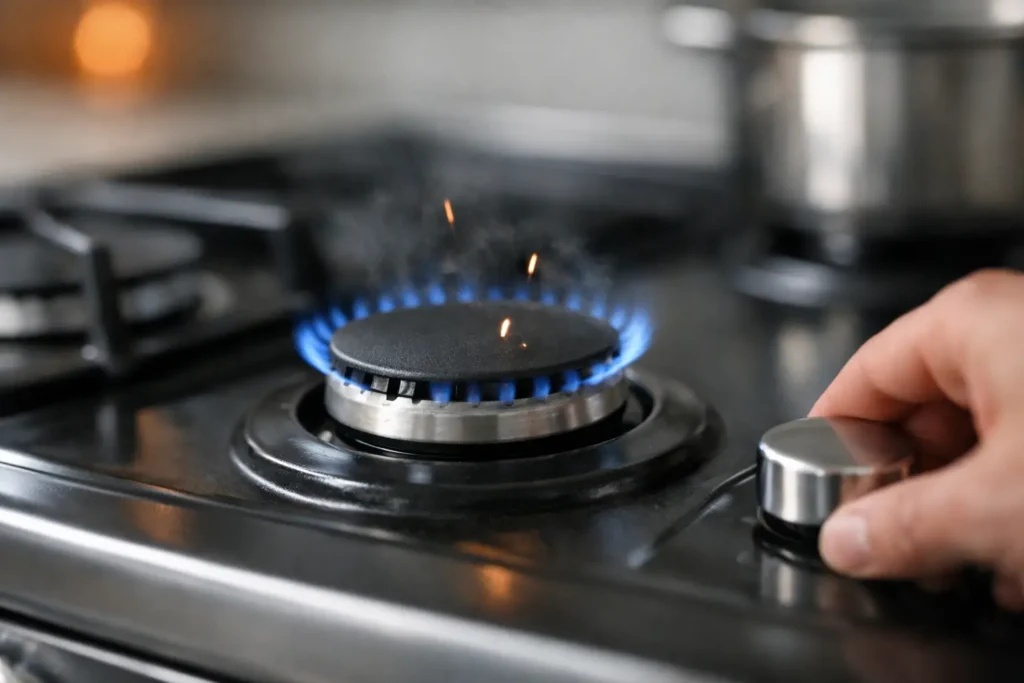
When a burner clicks and clicks but never lights, dinner stops fast. Sometimes the fix is simple. Sometimes it is a sign of a failing ignition part, a gas flow issue, or moisture where it should not be. The key is knowing which problems are safe to check yourself and which ones need a trained technician.
A gas range is one of those appliances you expect to work on demand. When it does not, the issue can feel urgent, especially in a busy household, rental property, or commercial setting. If your gas range burner is not igniting, start with a calm, methodical approach. That helps you avoid wasted time, repeated failed attempts, and unnecessary safety risks.
Why a gas range burner is not igniting
Most burner ignition problems come down to one of four causes. The burner may not be getting enough gas, the igniter may not be producing a strong enough spark, the burner ports may be blocked, or the parts may be wet or out of alignment.
On many modern gas ranges, the igniter system is straightforward but sensitive. You turn the knob, gas flows, and the spark electrode lights the gas at the burner head. If any part of that sequence is interrupted, the burner may click without lighting, light unevenly, or fail completely.
The trade-off with gas cooking is speed and control, but the system does require clean components and reliable ignition parts. A burner that worked yesterday can stop lighting today because of something as minor as spilled soup or as significant as a failing spark module.
What to check first when your gas range burner is not igniting
Before you assume a major repair, look at the simplest possibilities first. If only one burner is affected, that usually points to a localized burner or ignition issue. If all burners fail at once, the problem may be related to gas supply, power, or a larger electrical fault inside the range.
Make sure the range has power. Even gas burners usually need electricity for the igniter to spark. If the display is blank, the outlet has lost power, or the breaker has tripped, the burner may not light at all.
Next, confirm that gas supply is available. If other gas appliances are also not working, the issue may not be the range itself. If you smell gas strongly and the burner is still not lighting, stop immediately, turn the control off, ventilate the area, and do not continue testing.
Then check whether the burner cap is seated correctly. A slightly off-center cap can prevent proper gas distribution and keep the flame from catching. This is common after cleaning.
Food debris and clogged burner ports
One of the most common reasons a burner will not ignite is blockage in the burner ports. Boil-overs, grease, and food particles can clog the small openings where gas exits. When that happens, the gas may not reach the spark in the right way, or the flame may only catch on one side.
If the burner cap and head are cool, remove them and inspect for buildup. Light cleaning can help, but be careful. You do not want to damage the ignition electrode or widen burner holes with the wrong tool. A soft brush or gentle cleaning method is usually enough for surface debris.
If the burner lights after cleaning but the flame is weak, uneven, or orange instead of mostly blue, there may still be deeper blockage or another issue affecting air and gas flow. That is where professional diagnosis starts to matter.
Moisture after cleaning
A burner that was working fine before a deep clean often fails because moisture is trapped around the igniter or burner base. Even a little water can interfere with sparking or proper flame spread.
This is why a gas range burner not igniting after cleaning is such a common service call. The burner may click continuously but not light until every component is fully dry. If you recently wiped the cooktop or washed the burner parts, allow more drying time before assuming a part has failed.
That said, repeated exposure to moisture can also wear down ignition components over time. If the burner only works occasionally after cleaning, the issue may be more than temporary dampness.
Igniter problems and weak spark
If you hear clicking but the burner does not light, the igniter may be sparking weakly or in the wrong place. You may even see a spark, but if it is inconsistent, delayed, or not positioned correctly at the gas flow point, ignition can still fail.
A worn spark electrode, cracked ceramic insulator, or damaged ignition wire can all cause this. In some cases, one burner fails while the others still work normally. In other cases, several burners may show erratic behavior because the spark module itself is failing.
This is where guessing can get expensive. Replacing the wrong part wastes time and money, and electrical ignition systems are not ideal for trial-and-error repairs. Accurate diagnosis is what gets the repair done right the first time.
When the burner clicks but still will not light
Clicking tells you the range is trying to ignite, but it does not confirm the full system is working. Gas still has to reach the burner properly, and the spark still has to ignite it.
If you have one burner that clicks but does not light while another burner lights normally, swap the burner cap positions if the design allows it and compare the results. If the problem follows the cap, the cap or burner assembly may be the issue. If it stays with the same burner location, the fault may be in the igniter, switch, or gas delivery at that burner.
If every burner clicks continuously or starts sparking on its own, that can point to a stuck switch, moisture intrusion, or a failing ignition system. Those issues are better handled by a certified appliance repair technician.
When not to keep troubleshooting
There is a clear line between basic observation and unsafe repair. If you smell gas, see delayed ignition with sudden flare-ups, notice charring around the burner area, or suspect damaged wiring, stop using the appliance.
The same goes for recurring ignition problems. A burner that works only after repeated attempts is not just inconvenient. It can become a safety concern and often signals a part that is deteriorating.
For households with children, tenants waiting on a repair, or a business kitchen that cannot afford downtime, prolonged DIY troubleshooting usually costs more than it saves. Fast scheduling, clear communication, and upfront pricing after diagnosis matter because they get the appliance back into reliable service without guesswork.
What a professional diagnosis looks for
A proper service call does more than confirm the burner is not lighting. The technician checks burner alignment, electrode condition, spark strength, switch function, wiring integrity, gas flow, and signs of wear across the full ignition system.
That matters because similar symptoms can come from different failures. A clogged burner and a failing spark module may both look like the same problem at first. So can a bad switch harness and a moisture-related short. The right repair depends on finding the actual cause, not just the visible symptom.
For premium ranges and higher-end units, that accuracy becomes even more important. Brand-specific parts, tighter burner tolerances, and more complex ignition systems leave less room for improvised fixes.
How to reduce future ignition problems
Regular cleaning helps, but technique matters. Keep burner caps properly seated, clean up spills before they harden, and avoid soaking ignition components. Gentle routine maintenance is better than aggressive scrubbing after heavy buildup.
It also helps to pay attention to small warning signs. Slow ignition, uneven flame, or occasional clicking after the burner is lit often shows up before complete failure. Addressing those signs early can prevent a bigger interruption later.
If your range is older, repairs may depend on part availability and overall condition. Sometimes a single burner issue is an easy repair. Sometimes repeated ignition failures across multiple burners suggest broader wear. It depends on the age of the unit, the model, and how the range has been used.
When you need the problem handled quickly and correctly, professional appliance repair is the safer path. United Technical Services provides certified, fully insured service with clear communication, fast scheduling, and upfront pricing after diagnosis throughout Northern New Jersey and nearby service areas. That means less downtime, fewer surprises, and a repair process built around getting your kitchen working again.
A burner that will not ignite is easy to put off for a day or two, until it affects every meal and every routine around it. If the basic checks do not solve it, the smartest next step is to have it diagnosed before a small ignition problem turns into a larger repair.