
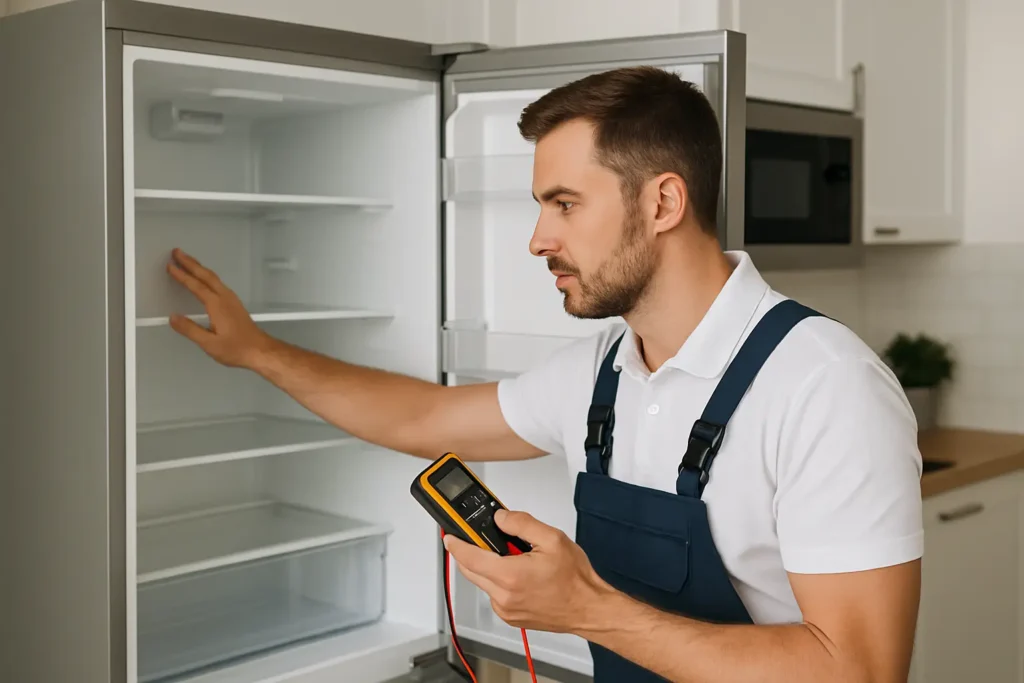
Milk feels lukewarm. The freezer ice is soft. And the fridge is making that “something’s off” hum that you can’t ignore.
When you search refrigerator not cooling repair near me, you’re not looking for a science project. You’re looking for a fast, dependable fix that protects your food, your kitchen, and your schedule. The tricky part is that “not cooling” can mean a handful of very different failures, and the right repair depends on accurate diagnosis. Replace the wrong part and you lose time and money, while the fridge keeps warming.
What “not cooling” really means (and why it matters)
A refrigerator has two jobs: move heat out of the fresh food section and keep the freezer cold enough to maintain safe temps. Many models cool the refrigerator compartment by sending cold air from the freezer through vents. That’s why you’ll often see one section warming up first.
If the freezer is cold but the fridge is warm, you may be dealing with an airflow problem: a blocked vent, a failing evaporator fan, or a defrost issue that’s choking airflow with frost. If both sections are warm, you’re more likely looking at a sealed system or compressor-related problem, a condenser airflow issue, or an electrical control problem.
The trade-off is simple: some causes are quick fixes, and some require specialized tools and certified experience. The sooner you narrow it down, the better your odds of preventing food loss and avoiding secondary damage.
What to check safely before you call
You should not have to take a refrigerator apart to figure out whether it needs service. A few safe checks can tell you a lot and can also prevent a service call for a simple settings or airflow issue.
Start with the basics. Confirm the temperature settings didn’t get bumped. Many refrigerators should be around 37-40°F in the fridge and 0°F in the freezer, but don’t chase the dial endlessly. If temps are rising, a “colder” setting won’t fix a mechanical failure.
Next, look at doors and gaskets. A door that isn’t sealing can make the unit run constantly and still not keep up, especially in humid summer weather. If you see moisture, fogging, or heavy condensation, that’s a clue. Wipe the gasket and make sure shelves or bins aren’t preventing the door from closing fully.
Then check airflow. Don’t pack the fridge wall-to-wall. Cold air has to circulate, and vents can’t be blocked by containers or frozen food. If your freezer is overloaded or the back panel is coated in frost, airflow is already compromised.
Finally, listen and look underneath. If the condenser area is clogged with dust and pet hair, heat can’t leave the system efficiently. If it’s accessible, you can gently vacuum the grille area without disassembling anything. If the unit is built-in or tightly enclosed, don’t force it. You can also listen for fans. Many fridges have a condenser fan near the compressor. If the compressor is hot and you don’t hear that fan running when it should, that’s a strong sign you need service.
If you smell burning, see signs of electrical damage, or notice repeated clicking, stop there. Unplug the unit and schedule diagnosis.
Common reasons a refrigerator stops cooling
Dirty condenser coils and poor ventilation
Condenser coils release heat. When they’re coated in dust, the refrigerator can’t dump heat fast enough, so interior temps rise. In many homes, this shows up as “it kind of cools, but not like it used to.”
If cleaning restores performance, great. If it doesn’t, dirty coils may have been masking a deeper issue, like a weak fan motor or a compressor that’s struggling.
Evaporator fan failure (cold air stops moving)
If the freezer is cold but the refrigerator is warm, the evaporator fan is a prime suspect. This fan moves cold air through the system. When it fails, you can have frost buildup, warm fridge temps, and uneven cooling.
A proper diagnosis confirms whether the motor is bad or the fan is being blocked by ice, which would point back to a defrost failure.
Defrost system problems (ice blocks airflow)
Modern refrigerators periodically defrost the evaporator coil to prevent ice buildup. If a defrost heater, defrost thermostat, sensor, or control board fails, frost can accumulate until airflow is severely restricted.
This often looks like a gradual warming issue over days or weeks. Many people notice the fridge warming first, then the freezer struggling later. Fixing the defrost system restores airflow and prevents recurring ice.
Start components and compressor issues
If you hear clicking and the refrigerator won’t maintain temps, start components like a relay or capacitor may be failing. Sometimes the compressor is fine and just can’t start. Other times, the compressor is failing or locked.
This is where “near me” matters. Compressor and sealed system work is not a guess-and-check situation. It requires correct testing, proper parts, and safe handling.
Sealed system and refrigerant problems
When a sealed system develops a restriction or leak, the unit may run but never get cold enough. You might see one section freezing while another stays warm, or both sections hovering well above safe temps.
Sealed system repairs can be the right move, but it depends on the refrigerator’s age, brand, and overall condition. A trustworthy technician will explain your options clearly, including the cost-benefit versus replacement.
Control boards, sensors, and dampers
If fans and compressor operation don’t match the temperature conditions, the problem may be electronic. A failed thermistor can “tell” the unit the wrong temperature. A damper that’s stuck closed can block cold air to the refrigerator compartment.
These problems are often misdiagnosed because they mimic other failures. Accurate testing matters.
When it’s a real emergency
If you have medication, breast milk, or large amounts of food at risk, treat a cooling failure as urgent. A refrigerator above 40°F for extended periods becomes a food safety issue. If you’re unsure how long it’s been warm, move high-risk items to a cooler with ice and limit door openings.
Also consider the mess factor. A refrigerator that’s running nonstop can overheat components. Water from defrosting ice can leak onto floors. If you see water pooling near electrical components or outlets, unplug the unit and keep the area dry.
What “repair near me” should actually mean
Fast scheduling is important, but speed without professionalism is how you end up with repeat failures. When you hire local refrigerator repair, you’re really hiring three things: accurate diagnosis, safe workmanship, and clear communication.
A good refrigerator service call should include verifying temperatures, checking airflow and fan operation, inspecting frost patterns, testing key electrical components, and confirming the root cause before recommending parts. It should also include a straightforward explanation of what failed, why it caused the cooling problem, and what the repair will cost before work begins.
That “before” is not a small detail. Upfront pricing after diagnosis protects you from surprises and prevents rushed decisions.
Questions to ask before you book service
You don’t need to interrogate anyone, but a few direct questions help you find a company that’s built for dependable outcomes.
Ask whether the technicians are certified and fully insured. Ask how quickly they can schedule, and whether same-day service is sometimes available. Ask what the diagnostic process looks like and whether you’ll receive repair options with pricing after the problem is confirmed.
If you have a premium refrigerator or a high-end brand, ask if they service those models regularly. High-end units can have different access requirements, parts considerations, and control systems, and experience matters.
What to expect during an on-site diagnosis
A professional technician will typically start by confirming symptoms and checking the simplest causes first: settings, door seal, airflow blockage, and condenser condition. Then they’ll move into operational checks, including fan function, compressor behavior, and defrost performance.
If the issue points to a sealed system or compressor, they should be direct about it. Sometimes the best decision is repair. Sometimes replacement makes more sense based on age, repair cost, and the likelihood of future issues. The right answer depends, and you should feel like you’re getting a clear recommendation, not a sales pitch.
Northern NJ homeowners and property managers: reduce downtime
If you’re managing a multi-unit property, refrigerator failures aren’t just inconvenient. They trigger tenant complaints, potential food loss claims, and repeat calls if the first repair was a shortcut.
The best approach is to treat “not cooling” as a same-day diagnostic priority when possible. A precise diagnosis helps avoid ordering the wrong part and scheduling a second visit while the tenant sits with a warm fridge.
For homeowners, the goal is simpler: get back to normal quickly, without sacrificing workmanship. That’s what keeps a repair from turning into a recurring problem every few months.
Ready to schedule refrigerator repair
If your refrigerator isn’t cooling consistently, the fastest path to a lasting fix is a professional diagnosis and a clear repair plan. United Technical Services (UTS) provides refrigerator and freezer repair across Northern New Jersey, with additional coverage in select areas of New York and Connecticut, using certified, fully insured technicians and upfront pricing after diagnosis. Book service at https://unitedtechnical-services.us/ and ask about the earliest available appointment.
A warm fridge is stressful, but you don’t have to troubleshoot it alone – get it diagnosed, get a clear price, and get it done right the first time so you can stop thinking about it.