
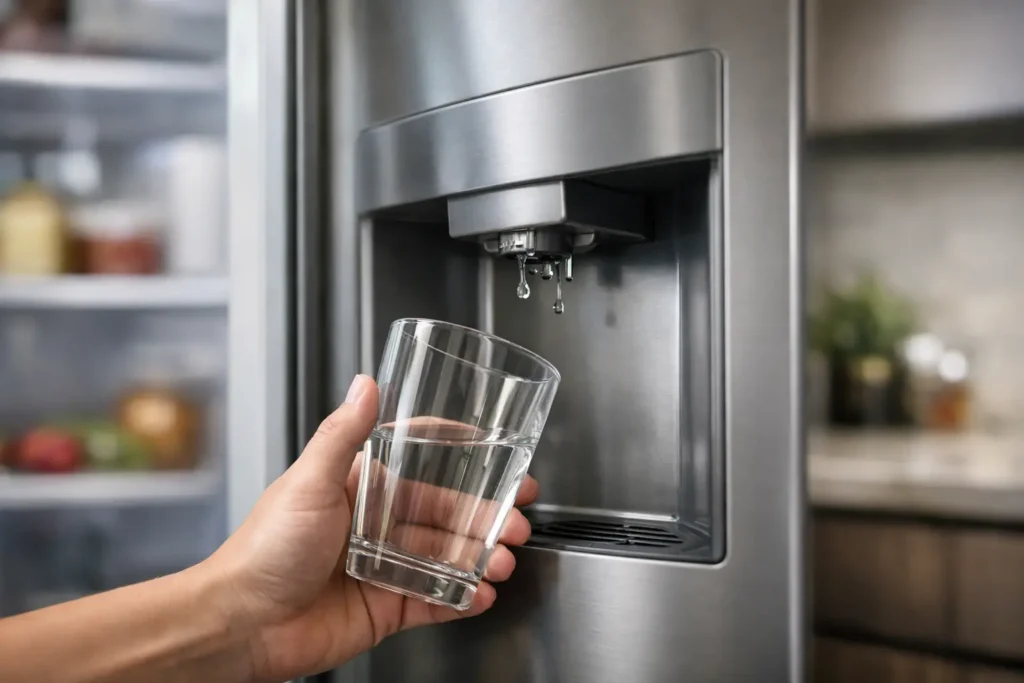
A refrigerator water dispenser usually quits at the worst possible time – right before dinner, during a busy morning, or in the middle of a full house. When you press the paddle and get nothing, the problem may be simple. It may also point to a part failure that needs a proper diagnosis before more issues follow.
If your refrigerator water dispenser is not working, the goal is not to guess. It is to narrow the problem down quickly, avoid damage, and restore normal use without wasting time or money.
Refrigerator water dispenser not working? Start with the basics
Before assuming the refrigerator needs a major repair, check the conditions that most often stop water flow. In many homes, the issue comes down to supply, temperature, or a locked control setting.
Start by confirming the refrigerator still has power and the display is active. If the dispenser light comes on but no water comes out, that usually means the issue is not a full power loss. Next, make sure the water shutoff valve behind the refrigerator is fully open and that the supply line is not kinked. A partially pinched line can slow flow enough to make the dispenser seem dead.
Then check the control panel. Some models have a dispenser lock or child lock that disables water and ice without affecting cooling. It sounds obvious, but this is one of the most common service calls because the refrigerator appears normal in every other way.
The filter is another frequent cause. A clogged or overdue water filter can restrict pressure so much that dispensing stops. If the filter is old, improperly installed, or recently replaced with a poor fit, the dispenser may not work correctly. On some refrigerators, removing and reinstalling the filter is enough to restore flow. On others, a filter bypass plug may be needed to confirm whether the filter housing itself is the problem.
When the refrigerator water dispenser is not working but the ice maker still works
This is where the diagnosis gets more specific. If the ice maker is still producing ice, the refrigerator is receiving water. That usually rules out a complete supply failure and shifts attention to the dispenser side of the system.
A common cause is a frozen water line inside the freezer door. This happens more often when freezer temperatures are set too cold or when airflow issues create cold spots near the dispenser tubing. The refrigerator may cool fine, the ice maker may still run, but the water line in the door freezes shut. In that case, pressing the dispenser paddle may produce a hum with no water flow.
The dispenser switch is another possibility. When you press the paddle, it should activate a small switch that sends power to the inlet valve. If that switch fails, nothing happens even though the rest of the refrigerator works normally. Some units also use a control board to manage dispenser functions, so a failed board can mimic a bad switch or valve.
There is also the inlet valve itself. Many refrigerators use a dual water inlet valve – one side for the ice maker and one for the dispenser. If the dispenser side of the valve fails, ice production may continue while the water dispenser stops.
What it means if you hear a hum but get no water
A humming sound is useful information. It often means the dispenser is trying to work, but water is not getting through.
That points to a few likely issues. The filter may be clogged. The water line may be frozen. The inlet valve may be energized but blocked internally by sediment or wear. In homes with hard water or aging plumbing, valve restriction is not unusual.
This is also where homeowners can lose time replacing the wrong part. A hum does not automatically mean the inlet valve is good. It only means it is receiving power or attempting to actuate. The valve can still be mechanically stuck or too weak to open properly.
If there is no sound at all
If the refrigerator water dispenser is not working and there is no click, hum, or change in sound, the problem may be electrical rather than a water flow issue.
The dispenser switch may have failed. The door switch may not be registering that the refrigerator door is closed. Some models will not dispense water if the door switch is faulty. A wiring issue in the door harness can also interrupt the circuit, especially on refrigerators where the freezer door is opened and closed constantly over the years.
Control boards are less common failures than filters or valves, but they do happen. If the display panel is acting strangely, multiple dispenser functions have stopped, or buttons respond inconsistently, electronic control issues should be considered.
Safe checks you can do before calling for service
There are a few practical checks that are worth doing, as long as you stay within basic homeowner-safe territory.
Replace the water filter if it is overdue, but use the correct filter for your model. A wrong fit can create its own problem. Inspect the water line behind the refrigerator for kinks, especially if the unit was recently pushed back into place. Confirm the shutoff valve is open. If your model has a lock feature, reset it. If the dispenser line may be frozen, adjusting the freezer temperature slightly warmer can help, but this is not always an immediate fix.
Beyond that point, the value of DIY starts to drop. Accessing internal valves, switches, wiring, or control boards without testing equipment can lead to misdiagnosis. It can also create leaks or electrical risk. For built-in and premium refrigerators, that risk is even higher because parts access is tighter and replacement costs are steeper.
Why dispenser problems should not be ignored
A failed dispenser is not always just an inconvenience. In some cases, it is an early sign of a larger problem.
A frozen dispenser line may suggest temperature regulation issues. A weak valve may indicate mineral buildup or inconsistent water pressure. Electrical failures at the dispenser can point to harness wear, switch failure, or control board problems that may later affect other functions.
There is also the leak risk. A deteriorating valve or loose connection can fail more completely over time. What starts as no water at the dispenser can later turn into water under the refrigerator, damage to flooring, or moisture around cabinetry.
For property managers and busy households, that trade-off matters. Waiting a few days to see what happens may be reasonable for a nonessential feature. It is less reasonable when the same system also feeds the ice maker, runs through hidden tubing, and can create a mess if the failure changes.
When it makes sense to call a professional
If you have already checked the filter, supply valve, control lock, and visible water line, the next step is usually professional diagnosis. The same is true if the dispenser works intermittently, stops after a filter change, hums without dispensing, or fails while the ice maker still works.
A certified technician can test the dispenser switch, verify voltage to the inlet valve, inspect for a frozen line, and determine whether the issue is mechanical, electrical, or electronic. That matters because refrigerator dispenser systems overlap. Replacing one part based on a guess can cost more than getting the problem diagnosed correctly the first time.
For homes and properties in Northern New Jersey, fast scheduling matters when a major appliance stops doing its job. United Technical Services handles refrigerator issues with certified, fully insured technicians, clear communication, and upfront pricing after diagnosis, so you know what is wrong before repair work begins.
What to expect from a proper diagnosis
A professional visit should do more than confirm that the dispenser is broken. It should identify why it failed and whether any related issues are developing.
That may include checking water pressure to the refrigerator, testing the inlet valve, inspecting filter housing alignment, evaluating dispenser switches, reviewing door wiring, and confirming freezer temperatures. On higher-end units, the diagnosis may also involve model-specific control behavior that does not show up in generic troubleshooting advice.
This is where experience saves time. Two refrigerators can show the same symptom and need entirely different repairs. One may need a filter head. Another may need a door line thaw and temperature correction. Another may need a new valve or dispenser control. A disciplined diagnostic process keeps the repair focused and avoids unnecessary parts.
The bottom line on dispenser failure
When a refrigerator water dispenser stops working, the right response is usually simple at first and more precise after that. Check the obvious causes. Do not force parts or keep guessing if the basics do not solve it. Water system problems inside a refrigerator are rarely improved by trial and error.
A dependable repair starts with a clear diagnosis, upfront pricing, and work done right the first time. If the dispenser is still not responding, getting it checked now is often the fastest way to get your kitchen back to normal – and avoid a small problem turning into a bigger one.