
When your refrigerator stops cooling or your dryer quits mid-cycle, the estimate matters almost as much as the repair. A good guide to appliance repair estimates helps you understand what you are paying for, what can change after diagnosis, and what clear communication should look like before any work begins.
Most customers are not looking for a lesson in appliance mechanics. They want the machine working again, the cost explained clearly, and no surprise charges after the technician is already in the house or building. That is exactly why the estimate process matters. It sets expectations, protects your time, and tells you a lot about the company you are hiring.
What an appliance repair estimate should include
A professional estimate should do more than give you a rough number over the phone. In most real repair situations, the technician needs to inspect the appliance first. Many symptoms overlap. A refrigerator that is not cooling could have a failed fan motor, control board issue, sealed system problem, or something as simple as a damaged door gasket. Those are very different repairs with very different costs.
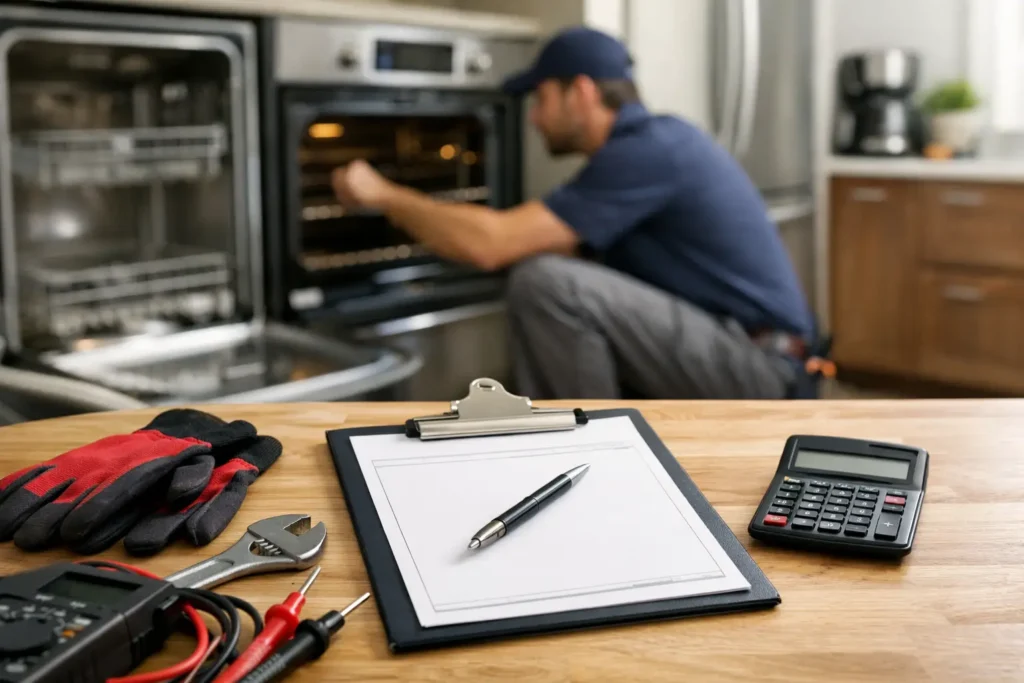
That is why the best guide to appliance repair estimates starts with diagnosis. A trained technician should inspect the unit, identify the actual cause of failure, and then present repair options with upfront pricing. This is the point where the estimate becomes useful instead of vague.
In most cases, a solid estimate will include the diagnostic visit, labor, parts, and whether additional work may be needed. It should also explain if the price is based on a standard repair or if there are variables that cannot be confirmed until the unit is opened. That distinction matters. Some jobs are straightforward. Others involve hidden damage, discontinued parts, or access issues in tight laundry closets, built-ins, or commercial spaces.
Why phone quotes are often incomplete
Customers understandably want a price before scheduling. That is reasonable. But appliance repair is not like ordering a standard service with one fixed rate. The same symptom can point to several failures, and guessing too early usually creates frustration later.
If a company promises an exact total before diagnosis on a complex problem, that can be a red flag. Either the quote is padded to cover unknowns, or it is unrealistically low and likely to change once the technician arrives. Neither is ideal.
A better approach is clear communication from the start. The company should explain the service call or diagnostic fee, what that covers, and when you will receive the full repair estimate. This gives you a fair process. You know the technician is coming to identify the issue accurately, and you know no repair should begin until you approve the price.
The main factors that affect repair estimates
The biggest cost driver is usually the failed component itself. A heating element for a dryer is not priced the same as a control board for a premium oven or a compressor-related refrigerator issue. Appliance brand matters too. Standard household models often have more readily available parts, while premium brands and built-in units can require specialty components and more labor.
Labor time is the next major factor. Replacing a dishwasher drain pump is not the same as pulling a built-in refrigerator from cabinetry or accessing a stacked laundry unit in a tight utility room. The estimate should reflect the actual work involved, not just the part.
Urgency and part availability can also influence timing and cost. Same-day or next-day service may be possible depending on the issue, but if a specialty part needs to be ordered, the repair may take longer even when the diagnosis is complete. That does not necessarily mean the estimate is wrong. It means the company is being honest about the repair path.
What upfront pricing after diagnosis really means
This phrase gets used a lot, but it should mean something specific. Upfront pricing after diagnosis means the technician identifies the problem first, explains the recommended repair, and gives you the price before starting the work. You are not agreeing to a blank check. You are approving a defined service.
This protects homeowners, property managers, and business operators alike. If the washer in a rental unit fails, you need to know whether the issue is a drain pump, control problem, or motor-related repair before authorizing work. If a commercial kitchen appliance is down, you need a realistic estimate that supports a fast decision, not a vague promise.
The right company will walk you through the estimate in plain language. What failed, why it matters, what the repair includes, and whether repair makes sense based on the age and condition of the appliance. Sometimes the answer is yes, repair it. Sometimes the better business decision is replacement. Honest guidance is part of a professional estimate.
Questions to ask before approving the estimate
You do not need to ask ten complicated questions. A few direct ones will tell you a lot. Ask what the diagnosis found, what parts are being replaced, whether labor is included, and whether there are any known conditions that could change the final cost. Also ask about warranty coverage on parts and labor.
If the explanation feels rushed or unclear, pause. A repair company working in your home or commercial space should communicate with confidence and respect. Clear communication is not a bonus feature. It is part of doing the job right the first time.
For multi-unit properties and businesses, it also helps to ask about scheduling and follow-up. If a part is not in stock, what is the next step? How quickly can the return visit happen? A good estimate is not just about dollars. It is about minimizing downtime.
Red flags in appliance repair estimates
The biggest warning sign is pressure. If you are being pushed to approve work without a clear diagnosis or written pricing, step back. Another red flag is a quote that sounds too simple for a complicated issue. Major appliances have mechanical, electrical, and control-related systems, and real diagnosis takes training.
Be cautious with companies that speak in broad ranges but avoid specifics once on site. You should understand what you are authorizing. That does not mean every repair is perfectly predictable, but it does mean the technician should explain what is known, what is likely, and what could change.
You should also expect professionalism in the home or workplace. Certified, fully insured technicians matter because appliance repair involves electricity, gas connections, water lines, ventilation, and expensive equipment. The estimate is only part of the picture. Safe, accountable workmanship matters just as much.
When repair is worth it and when it is not
Not every estimate should lead to a repair approval. If the appliance is near the end of its expected life, has repeated issues, or requires a major component on a lower-value unit, replacement may be the smarter move. On the other hand, many problems that feel catastrophic are actually very repairable when diagnosed correctly.
This is especially true for washers, dryers, dishwashers, ovens, and many refrigerator issues. A professional estimate should help you make the decision based on real conditions, not guesswork. That kind of guidance saves money over time because it avoids both unnecessary replacements and temporary fixes that do not last.
Why local service quality matters as much as the price
A low estimate is not a win if the diagnosis is wrong, the part is misordered, or the problem returns a week later. For essential appliances, speed and accuracy matter together. You need responsive scheduling, but you also need a technician who can identify the issue correctly and complete the repair safely.
That is why many customers in Northern New Jersey look for a company that combines certified, fully insured technicians with clear communication and upfront pricing. At United Technical Services, the goal is simple: diagnose the issue accurately, explain the repair clearly, and get the appliance back in service with as little disruption as possible. You can learn more or book service at https://unitedtechnical-services.us/.
A repair estimate should leave you feeling informed, not cornered. If the company explains the diagnosis clearly, presents the cost before work begins, and respects your approval process, you are already on the right track. When an appliance fails, that kind of clarity is not just helpful. It is part of getting life back to normal faster.