
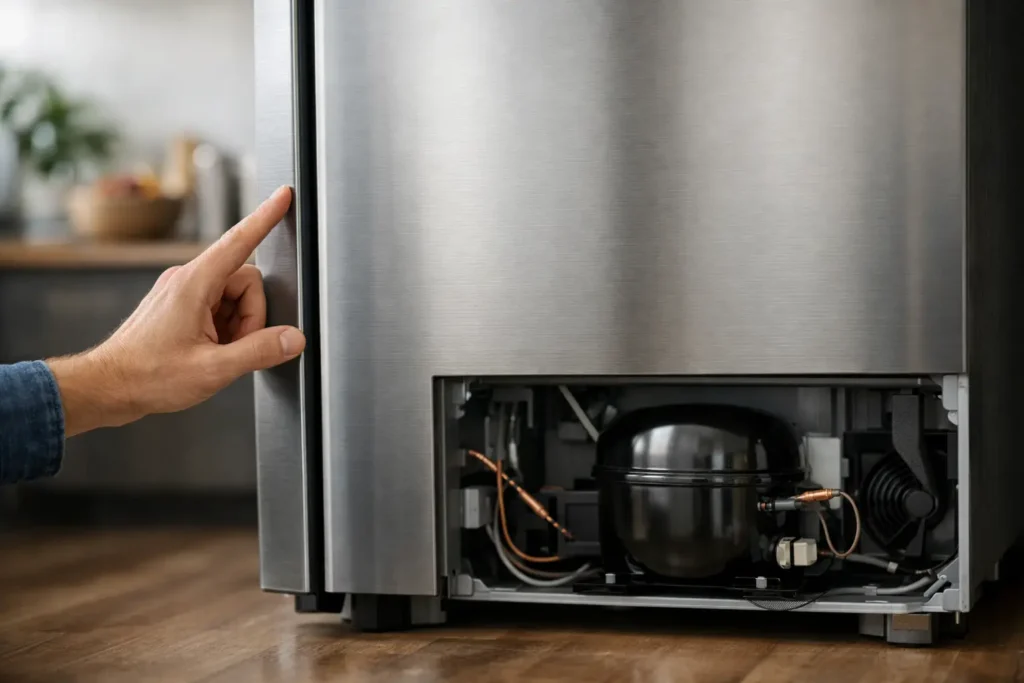
That click every few minutes is not just annoying. If your refrigerator tries to start, clicks, and then goes quiet, the cooling system may be failing to turn on at all. In many homes, that means rising food temperatures, spoiled groceries, and a repair problem that gets worse the longer it runs unchecked.
When a refrigerator compressor clicking then stops becomes the pattern, the issue is usually tied to the compressor start system, the compressor itself, or the refrigerator’s electrical controls. Some causes are relatively straightforward. Others point to a major sealed system problem. The key is getting the diagnosis right the first time so you do not waste time or money replacing the wrong part.
What the clicking usually means
Most refrigerators make some normal operating sounds, but a repeated click followed by silence is different. That sound often comes from the start relay or overload protector near the compressor. The refrigerator is trying to start the compressor, the compressor draws power, and then the protective device shuts it down because startup failed or current is too high.
In plain terms, the machine is attempting to begin the cooling cycle and cannot stay running. Sometimes it retries every few minutes. Sometimes it warms up quickly and stops cooling almost entirely.
If the interior lights are on but the refrigerator is not getting cold, that clicking is one of the strongest signs that the problem is in the compressor circuit rather than a simple power loss.
Refrigerator compressor clicking then stops: most common causes
A failed start relay
This is one of the most common causes, especially on older refrigerators. The start relay gives the compressor the extra electrical boost it needs to start. When that relay fails, the compressor may click, hum briefly, and then shut off.
This is also one of the few issues that can sometimes be repaired without major sealed system work. The trade-off is that a bad relay can look very similar to a failing compressor. If the relay is replaced without proper testing and the real issue is internal compressor failure, you have paid for a part that was never going to solve the problem.
A bad overload protector
The overload protector is designed to shut the compressor down if it overheats or pulls too much current. If the overload itself is faulty, it may trip too early. If it is doing its job correctly, it may be signaling a deeper problem such as a hard-starting or seized compressor.
That is why the clicking sound matters, but the sound alone is not enough for a reliable diagnosis.
A failing compressor
If the compressor motor is locked up internally or has damaged windings, it may try to start and then stop almost immediately. This is a more serious issue. Compressor replacement is a major repair and, depending on the refrigerator’s age and brand, it is not always the most cost-effective route.
For homeowners, property managers, and small businesses, this is where professional guidance matters. You want a clear answer on whether the repair makes financial sense before work begins.
Voltage or power supply problems
Low voltage, a damaged outlet, a weak extension setup, or wiring issues can interfere with compressor startup. Refrigerators should not be running on extension cords in the first place, and a poor electrical connection can create symptoms that look like a compressor problem.
This is less common than a failed relay, but it does happen. It is especially worth checking after recent electrical work, outages, or breaker trips.
Control board or thermostat faults
Some refrigerators use electronic control boards to manage compressor operation. If the board is not sending the correct signal, or if a temperature control component is failing, the compressor may not engage properly. In these cases, the clicking may still be heard near the compressor area, but the root cause starts elsewhere.
This is where accurate diagnostics save time. Guessing between a relay, board, and compressor can get expensive quickly.
What you can check before calling for service
There are a few practical steps you can take safely before scheduling a repair. First, confirm the refrigerator is plugged directly into a working wall outlet. If the outlet is controlled by a switch, make sure it has not been turned off accidentally.
Next, listen carefully. If you hear a repeated click every few minutes from the back or bottom of the refrigerator and the unit is warming up, that is useful information for the technician. Also check whether the condenser fan is running and whether the compressor feels extremely hot. Do not keep touching it if it is overheating.
If the coils are visibly packed with dust and pet hair, cleaning them may help the refrigerator run cooler overall, but do not expect dirty coils alone to explain a compressor that clicks and stops. They can contribute to overheating, but they are rarely the only cause of this exact symptom.
You should also move perishable food to another refrigerator or cooler if temperatures are rising. Waiting too long turns an appliance problem into a food loss problem.
What not to do
Do not keep unplugging and replugging the refrigerator every few minutes hoping it will catch and start. That repeated stress can make a marginal compressor or relay situation worse.
Do not install random parts based on a video that seems close to your model. Refrigerators vary more than most people expect, and a symptom-based guess can lead to the wrong repair.
And do not ignore a hot compressor or burning smell. That is the point where safety matters as much as cooling performance.
When the problem is urgent
If the refrigerator is in a busy household, a rental unit, or a commercial setting, compressor startup failure is usually an urgent service call. The appliance may look like it is still on because lights and controls work, but cooling can drop off fast when the compressor never actually runs.
That matters for families trying to save a week’s worth of groceries, for property managers trying to avoid tenant complaints, and for businesses that cannot afford downtime. In each case, speed matters, but so does getting the answer right. A rushed but incorrect repair only extends the disruption.
How a professional diagnosis works
A qualified technician will typically test the start device, inspect wiring, measure compressor amperage, and evaluate whether the compressor is attempting to start or is mechanically locked. On electronic models, they may also verify board output and related control functions.
This process matters because several failures can produce the same click. The goal is to narrow it down before any repair is approved. That is where clear communication and upfront pricing after diagnosis make a real difference. You should know whether the issue is a manageable component replacement or a larger repair decision before moving forward.
For local customers dealing with refrigerator compressor clicking then stops, United Technical Services provides certified, fully insured appliance repair with fast scheduling and a service approach built around accurate diagnostics, upfront pricing, and work done right the first time.
Repair or replace?
It depends on the refrigerator’s age, brand, condition, and the exact failed part. If the issue is a start relay or overload, repair is often very reasonable. If the compressor has failed internally, the decision gets more complicated.
A newer premium refrigerator may justify a major repair. An older builder-grade unit may not. The right answer is not the same for every home or property. What most customers want is a straightforward recommendation based on cost, expected reliability, and how quickly the refrigerator can be returned to service.
Why accurate diagnosis matters with compressor problems
Compressor-related symptoms are where a lot of appliance repairs go sideways. A quick guess might sound cheaper upfront, but replacing the wrong part delays the fix and adds cost. That is frustrating in a home and even more disruptive in a multi-unit building or business.
A disciplined service process protects you from that. Certified technicians, safe testing, and clear communication are not extras here. They are the difference between a repair that solves the issue and one that sends you back to square one.
If your refrigerator is clicking, warming up, or failing to hold temperature, trust what the appliance is telling you. It is asking for attention now, not after the groceries are lost and the problem has had more time to escalate.