
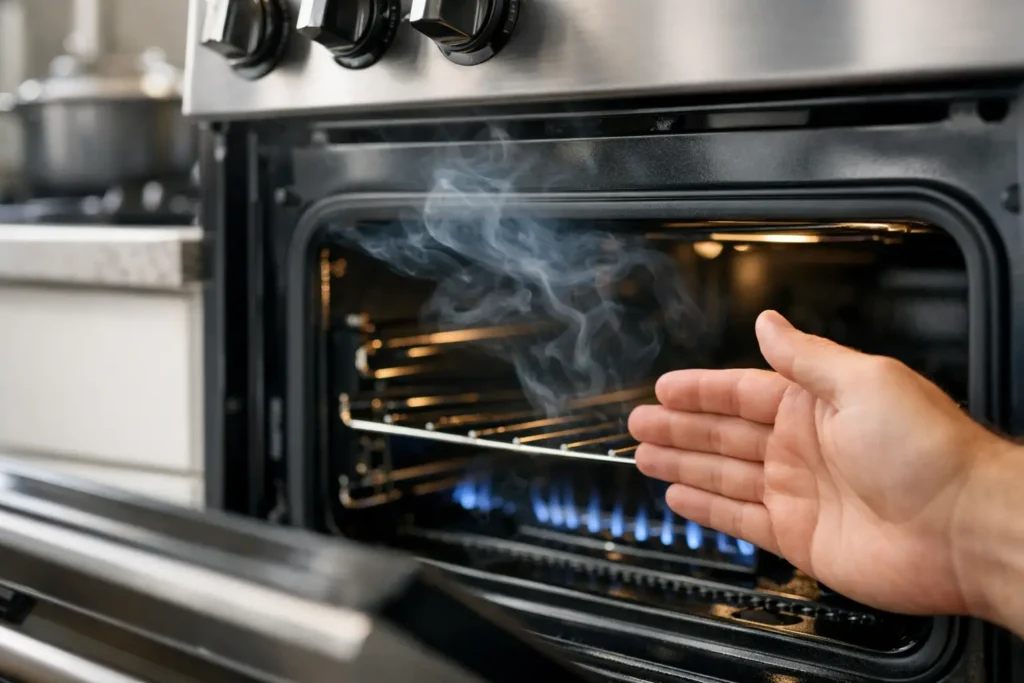
You walk into the kitchen, nothing is cooking, and there it is – that faint but unmistakable gas odor. If you are dealing with an oven gas smell when off, do not ignore it and do not assume it will clear on its own. A gas appliance should not release fuel into your home when it is not in use, and even a light odor can point to a problem that needs a proper diagnosis.
When an oven gas smell when off is an emergency
There is a difference between a brief odor during ignition and gas smell from an appliance that is sitting idle. If the oven is off and you still smell gas, treat that as a safety issue first and a repair issue second.
If the smell is strong, if anyone feels lightheaded, or if the odor is spreading beyond the kitchen, leave the area right away. Do not turn lights or appliances on or off, do not use a lighter or match, and do not try to keep testing the oven. From a safe location, contact your gas utility or emergency services if needed.
If the smell is mild and isolated, the safest next step is still to stop using the appliance until it is checked. Small leaks can stay small for a while, then become bigger problems without warning.
What can cause gas smell when the oven is off?
In most cases, the issue comes down to one of a few parts or connections. The exact cause matters because some problems are relatively contained, while others involve the gas supply itself.
A leaking gas valve
The safety valve or control valve is designed to stop gas flow when the oven is not operating. If that valve is worn, sticking, or not sealing correctly, small amounts of gas may continue to pass through. That can create a faint but persistent odor around the range, even hours after use.
This is not something to guess at. Valves can fail in different ways, and replacing the wrong part wastes time and money.
Loose or damaged gas connections
The odor may not be coming from inside the oven cavity at all. Flexible gas lines, shutoff valves, and internal fittings can loosen over time or develop leaks. Sometimes a homeowner notices the smell only near the back of the range. Other times it seems strongest when cabinets are closed and the kitchen is still.
This is one reason professional diagnosis matters. What feels like an oven problem may actually be a supply line issue.
Burner control problems
On a gas range, a surface burner knob that is not fully in the OFF position can release a small amount of gas. Some control issues are obvious. Others are subtle, especially on older units where knobs are worn or the switch mechanism is no longer lining up the way it should.
If the smell started after cleaning, moving the appliance, or heavy use, controls are worth checking. But if everything appears off and the smell remains, stop there and have it inspected.
Ignition system faults
A weak igniter usually causes delayed ignition while the oven is trying to light. But in some cases, ignition-related issues can be part of a bigger gas flow problem. If gas is not igniting correctly, it can linger briefly in places it should not.
That said, ignition issues usually show up while baking or broiling, not only while the oven is off. This is where the details matter. A technician will look at the full pattern, not just one symptom.
Recent cleaning or spill residue
There is one situation that can cause confusion. Burned-off food residue, cleaning chemicals, or grease inside the oven can create strong odors that some people mistake for gas. Self-clean cycles are especially known for this.
Still, natural gas has a very distinct sulfur-like smell. If that is what you are noticing, assume it is gas until proven otherwise.
What you can check safely
Homeowners should keep this part simple. There are a few safe observations you can make without taking anything apart.
First, confirm that all burner knobs are fully off. Check the oven controls as well. Next, note where the odor is strongest – inside the oven, near the cooktop, or behind the appliance. Also pay attention to whether the smell is constant or comes and goes.
That information helps with diagnosis, but it does not replace it. Do not pull the range out if you are not comfortable doing it safely. Do not spray for leaks with random household products. And do not attempt to tighten gas fittings unless you are trained to work on gas appliances.
What not to do if you smell gas
This is where people often make the situation worse. They keep sniffing around the appliance, try a few bake cycles to “test it,” or assume the problem is minor because the oven still heats.
An oven can work and still have a gas leak. Performance is not the same thing as safe operation.
Avoid using the appliance, avoid open flames, and avoid DIY disassembly. Gas repairs require the right tools, leak testing methods, and part-specific diagnosis. If the problem involves a valve, regulator, igniter circuit, or supply connection, guessing is not a good plan.
Why the smell may come and go
One of the more frustrating parts of this problem is inconsistency. You may smell gas one evening, then nothing the next morning. That does not automatically mean the issue resolved itself.
Temperature changes, air movement, recent oven use, and how much the home is ventilated can all affect when the odor is noticeable. A weak valve leak or loose fitting may only be obvious under certain conditions. Intermittent smell is still a valid service call.
For property managers and building operators, this point matters even more. If a tenant reports gas smell near a range, it should be treated seriously even if maintenance cannot reproduce it immediately. Delayed response creates unnecessary risk.
Why professional diagnosis saves time
With gas appliances, accurate diagnosis is the difference between a quick, safe repair and a repeat problem. Replacing an igniter because the oven is acting oddly does not help if the real issue is a leaking valve. Tightening a visible fitting does not solve an internal component failure.
A qualified technician should inspect the appliance, test the relevant components, and confirm where the gas is escaping before any repair is approved. That is how you avoid parts swapping and surprise costs.
For homeowners, that means less downtime and more confidence that the appliance is done right the first time. For commercial kitchens, shared buildings, and rental units, it means getting back to normal operation without unnecessary disruption.
When to call for service
If you notice an oven gas smell when off more than once, schedule service. If the odor is strong, widespread, or paired with headaches or dizziness, leave the area and treat it as urgent.
This is not a wait-and-see issue. Gas appliances are reliable when maintained correctly, but they need prompt attention when something changes. Certified, fully insured technicians can identify whether the problem is a valve, fitting, ignition component, control issue, or something outside the oven itself.
If you need dependable local help, United Technical Services provides fast scheduling, clear communication, and upfront pricing after diagnosis for residential and commercial appliance repair.
A quick word on older ovens
Older gas ovens can be more prone to odor complaints because seals, valves, and controls wear over time. That does not mean every older unit needs replacement. In many cases, a targeted repair restores safe operation.
But age does affect the repair decision. If multiple gas-related components are failing, or if parts are no longer reliable to source, replacement may make more sense than continued repair. A good service company will tell you plainly when repair is worthwhile and when it is not.
If your kitchen smells like gas and the oven is off, trust what your nose is telling you. Get it checked, get a clear answer, and do not settle for guesswork when safety is on the line.